[서울]염소고기 '호주산을 국내산으로' 속여 판 업소 덜미
서울시 민생사법경찰국, 보양식 음식점 132곳 집중 단속…위반 업소 10곳 적발
원산지 거짓·혼동 표시는 검찰 송치, 미표시는 과태료 처분…시민 제보 시 최대 2억 원 포상
원산지 거짓·혼동 표시는 검찰 송치, 미표시는 과태료 처분…시민 제보 시 최대 2억 원 포상
가금현 기자입력 : 2026. 07. 08(수) 15:33


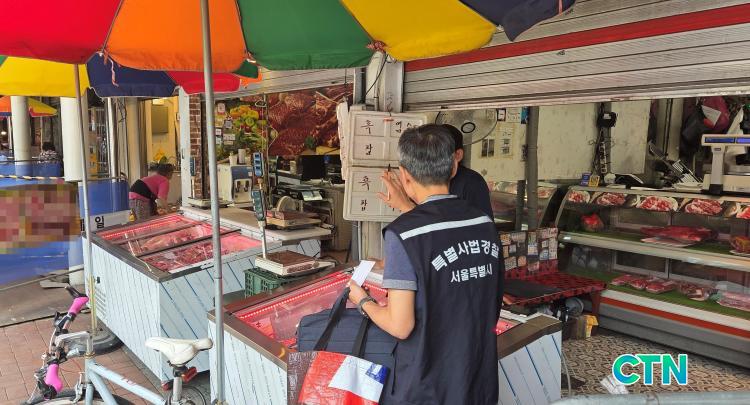
염소고기 '호주산을 국내산으로' 속여 판 업소 덜미/사진=서울시청 제공
[서울/CTN]가금현 기자= 서울 한복판에서 호주산 염소고기를 국내산으로 둔갑시켜 판매하는 등 원산지 표시법을 위반한 음식점들이 대거 적발됐다.
서울시 민생사법경찰국은 여름철을 맞아 지난 6월 15일부터 7월 3일간 염소·오리고기 등 보양식 전문 음식점 및 식육판매업소 132곳을 대상으로 집중 단속을 실시한 결과, 원산지를 거짓·혼동 표시하는 등 법령을 위반한 업소 10곳을 적발했다고 밝혔다.
이번 단속은 오는 2027년 2월 7일부터 개고기의 유통·판매가 전면 금지됨에 따라, 대체 보양식으로 급부상한 염소고기의 국내 수요와 수입량이 급증하는 추세에 맞춰 시민들의 먹거리 안전을 확보하기 위해 추진됐다.
실제로 한국농촌경제연구원에 따르면 국내 염소고기 소비량은 2021년 6,600톤에서 2024년 13,000톤으로 3년 새 97% 증가했으며, 수입량 역시 같은 기간 1,883톤에서 8,143톤으로 332% 폭증했다.
▲ 소비자를 기만한 다양한 위반 사례들 단속 결과 원산지 혼동 표시 4곳, 거짓 표시 1곳, 원산지 미표시 5곳 등 총 10개의 음식점이 레이더망에 걸렸다.
▲원산지 혼동 표시: 외부 출입구에는 '100% 국내산 흑염소'라고 대대적으로 홍보했으나, 내부 메뉴판에는 호주산을 섞어 쓴다고 은밀하게 표기했다가 적발됐다. 또 다른 업소는 원산지 표시판에 '호주산/국내산'을 동시 표기해 두고, 실제로는 값싼 호주산 염소고기만 사용해 흑염소탕을 조리·판매해 온 것으로 드러났다.
▲원산지 미표시: 수입산이 포함된 흑염소탕과 수육 등을 판매하면서 원산지를 아예 표시하지 않았다.
▲원산지 거짓 표시: 중국산 배추김치를 사용하면서 원산지 표시판에는 버젓이 '국내산 배추김치'로 거짓 기재했다.
이번 단속은 원산지 관리 전문기관인 국립농산물품질관리원 경기지원 서울사무소와 정보 수집부터 현장 단속까지 전 단계에서 긴밀하게 협업해 실효성을 높였다. 또한 서울시 보건환경연구원을 통해 국내산으로 표시된 염소고기 21종에 대해 유전자 검사를 병행한 결과, 다행히 해당 샘플들은 모두 국내산 재래 흑염소 고기인 것으로 확인됐다.
▲ 거짓 표시는 '형사처벌', 미표시는 '과태료' 엄정 조치 서울시는 원산지를 거짓·혼동 표시한 5개소에 대해 수사 후 검찰에 송치할 예정이며, 원산지를 표시하지 않은 5개소에는 최대 1,000만 원 이하의 과태료를 부과하는 등 엄정하게 조치할 방침이다.
현행 「원산지표시법」에 따르면 원산지를 거짓이나 혼동하여 표시할 경우 7년 이하의 징역 또는 1억 원 이하의 벌금형에 처해지며, 미표시의 경우 1,000만 원 이하의 과태료가 부과된다.
서울시 민생사법경찰국은 불법행위 근절을 위해 시민들의 적극적인 제보가 중요하다고 당부했다. 시민이 스마트폰 앱('서울 스마트 불편신고')이나 서울시 홈페이지('민생침해 범죄신고센터')를 통해 결정적인 증거를 제보할 경우, 관련 조례에 따라 심의를 거쳐 최대 2억 원의 포상금이 지급된다.
변경옥 서울시 민생사법경찰국장은 "음식점 대다수는 원산지를 올바르게 표시하고 있지만 일부 업소의 불법행위가 여전한 만큼, 시민분들의 꼼꼼한 확인과 관심이 필요하다"며 "원산지 표시 위반행위를 끝까지 추적해 시민들이 안심하고 외식을 즐길 수 있는 환경을 만들겠다"고 강조했다.
[영문 번역 기사]
Australian Goat Meat Disguised as Domestic! 10 Restaurants Caught in Seoul Counterfeit Inspection
Seoul Special Judicial Police Bureau for Public Safety targets 132 restorative food restaurants
Violators face prosecution or fines; whistleblowers eligible for rewards up to 200 million KRW
[CTN NEWS = Reporter Geum-hyun Ga] Restaurants in the heart of Seoul have been caught selling imported Australian goat meat disguised as high-quality domestic meat.
The Seoul Special Judicial Police Bureau for Public Safety announced that it conducted a concentrated inspection from June 15 to July 3 on 132 restaurants and meat distributors selling popular summer health foods (such as goat and duck meat). As a result, 10 establishments were caught violating the Act on Origin Labeling of Agricultural and Fishery Products by falsely marking or creating confusion about food origins.
The crackdown comes amid a sharp rise in domestic demand and imports of goat meat, which has emerged as a major alternative summer delicacy ahead of the total ban on the distribution and sale of dog meat, set to take effect on February 7, 2027. According to the Korea Rural Economic Institute (KREI), South Korea's goat meat consumption nearly doubled from 6,600 tons in 2021 to 13,000 tons in 2024 (a 97% increase). Concurrently, imports skyrocketed by 332%, jumping from 1,883 tons to 8,143 tons over the same three-year period.
▲ Types of Violations Detected The crackdown revealed 4 cases of misleading labeling, 1 case of false labeling, and 5 cases of completely failing to display the country of origin.
Misleading Origin Labels: One restaurant advertised "100% Domestic Black Goat" on its main entrance but noted in small print on the indoor menu that it blended Australian meat. Another establishment listed the origin as "Australian/Domestic" but exclusively used cheaper Australian goat meat to cook its black goat soup.
Failure to Display Origin: Five restaurants served black goat soup and boiled meat (suyuk) containing imported meat without providing any country-of-origin labels.
False Origin Labels: One eatery served imported Chinese kimchi while falsely claiming it was "Domestic Kimchi" on its origin board.
To maximize the inspection's efficacy, Seoul city authorities collaborated fully—from initial data collection to field raids—with the Seoul Office of the Gyeonggi Regional Headquarters under the National Agricultural Products Quality Management Service. In addition, the Seoul Metropolitan Government Institute of Public Health and Environment conducted DNA testing on 21 samples marked as domestic; fortunately, all tested samples were verified as authentic domestic Korean native black goat meat.
▲ Criminal Charges for False Labels, Fines for Non-disclosure The Seoul Special Judicial Police Bureau plans to forward the 5 establishments guilty of false or misleading labeling to the prosecution for criminal investigation. The remaining 5 establishments that failed to label their food origins will face administrative fines.
Under the current law, falsely labeling or intentionally misleading consumers about food origins carries a penalty of up to 7 years in prison or a fine of up to 100 million KRW. Failing to display the origin results in an administrative fine of up to 10 million KRW.
The city emphasized that public vigilance and active reporting are vital to eradicating these illegal practices. Citizens can report suspected violations through the "Seoul Smart Complaint Report" smartphone app or via the "Public Safety Criminal Report Center" on the Seoul Metropolitan Government website. Whistleblowers providing decisive evidence may receive a reward of up to 200 million KRW following an official review.
"While the vast majority of restaurants properly label their ingredients, a few bad actors continue to engage in illegal practices, making it crucial for citizens to meticulously check food origins," said Kyeong-ok Byeon, Director of the Seoul Special Judicial Police Bureau for Public Safety. "We will relentlessly pursue violators to ensure a healthy and trustworthy dining environment for all citizens."
서울시 민생사법경찰국은 여름철을 맞아 지난 6월 15일부터 7월 3일간 염소·오리고기 등 보양식 전문 음식점 및 식육판매업소 132곳을 대상으로 집중 단속을 실시한 결과, 원산지를 거짓·혼동 표시하는 등 법령을 위반한 업소 10곳을 적발했다고 밝혔다.
이번 단속은 오는 2027년 2월 7일부터 개고기의 유통·판매가 전면 금지됨에 따라, 대체 보양식으로 급부상한 염소고기의 국내 수요와 수입량이 급증하는 추세에 맞춰 시민들의 먹거리 안전을 확보하기 위해 추진됐다.
실제로 한국농촌경제연구원에 따르면 국내 염소고기 소비량은 2021년 6,600톤에서 2024년 13,000톤으로 3년 새 97% 증가했으며, 수입량 역시 같은 기간 1,883톤에서 8,143톤으로 332% 폭증했다.
▲ 소비자를 기만한 다양한 위반 사례들 단속 결과 원산지 혼동 표시 4곳, 거짓 표시 1곳, 원산지 미표시 5곳 등 총 10개의 음식점이 레이더망에 걸렸다.
▲원산지 혼동 표시: 외부 출입구에는 '100% 국내산 흑염소'라고 대대적으로 홍보했으나, 내부 메뉴판에는 호주산을 섞어 쓴다고 은밀하게 표기했다가 적발됐다. 또 다른 업소는 원산지 표시판에 '호주산/국내산'을 동시 표기해 두고, 실제로는 값싼 호주산 염소고기만 사용해 흑염소탕을 조리·판매해 온 것으로 드러났다.
▲원산지 미표시: 수입산이 포함된 흑염소탕과 수육 등을 판매하면서 원산지를 아예 표시하지 않았다.
▲원산지 거짓 표시: 중국산 배추김치를 사용하면서 원산지 표시판에는 버젓이 '국내산 배추김치'로 거짓 기재했다.
이번 단속은 원산지 관리 전문기관인 국립농산물품질관리원 경기지원 서울사무소와 정보 수집부터 현장 단속까지 전 단계에서 긴밀하게 협업해 실효성을 높였다. 또한 서울시 보건환경연구원을 통해 국내산으로 표시된 염소고기 21종에 대해 유전자 검사를 병행한 결과, 다행히 해당 샘플들은 모두 국내산 재래 흑염소 고기인 것으로 확인됐다.
▲ 거짓 표시는 '형사처벌', 미표시는 '과태료' 엄정 조치 서울시는 원산지를 거짓·혼동 표시한 5개소에 대해 수사 후 검찰에 송치할 예정이며, 원산지를 표시하지 않은 5개소에는 최대 1,000만 원 이하의 과태료를 부과하는 등 엄정하게 조치할 방침이다.
현행 「원산지표시법」에 따르면 원산지를 거짓이나 혼동하여 표시할 경우 7년 이하의 징역 또는 1억 원 이하의 벌금형에 처해지며, 미표시의 경우 1,000만 원 이하의 과태료가 부과된다.
서울시 민생사법경찰국은 불법행위 근절을 위해 시민들의 적극적인 제보가 중요하다고 당부했다. 시민이 스마트폰 앱('서울 스마트 불편신고')이나 서울시 홈페이지('민생침해 범죄신고센터')를 통해 결정적인 증거를 제보할 경우, 관련 조례에 따라 심의를 거쳐 최대 2억 원의 포상금이 지급된다.
변경옥 서울시 민생사법경찰국장은 "음식점 대다수는 원산지를 올바르게 표시하고 있지만 일부 업소의 불법행위가 여전한 만큼, 시민분들의 꼼꼼한 확인과 관심이 필요하다"며 "원산지 표시 위반행위를 끝까지 추적해 시민들이 안심하고 외식을 즐길 수 있는 환경을 만들겠다"고 강조했다.
[영문 번역 기사]
Australian Goat Meat Disguised as Domestic! 10 Restaurants Caught in Seoul Counterfeit Inspection
Seoul Special Judicial Police Bureau for Public Safety targets 132 restorative food restaurants
Violators face prosecution or fines; whistleblowers eligible for rewards up to 200 million KRW
[CTN NEWS = Reporter Geum-hyun Ga] Restaurants in the heart of Seoul have been caught selling imported Australian goat meat disguised as high-quality domestic meat.
The Seoul Special Judicial Police Bureau for Public Safety announced that it conducted a concentrated inspection from June 15 to July 3 on 132 restaurants and meat distributors selling popular summer health foods (such as goat and duck meat). As a result, 10 establishments were caught violating the Act on Origin Labeling of Agricultural and Fishery Products by falsely marking or creating confusion about food origins.
The crackdown comes amid a sharp rise in domestic demand and imports of goat meat, which has emerged as a major alternative summer delicacy ahead of the total ban on the distribution and sale of dog meat, set to take effect on February 7, 2027. According to the Korea Rural Economic Institute (KREI), South Korea's goat meat consumption nearly doubled from 6,600 tons in 2021 to 13,000 tons in 2024 (a 97% increase). Concurrently, imports skyrocketed by 332%, jumping from 1,883 tons to 8,143 tons over the same three-year period.
▲ Types of Violations Detected The crackdown revealed 4 cases of misleading labeling, 1 case of false labeling, and 5 cases of completely failing to display the country of origin.
Misleading Origin Labels: One restaurant advertised "100% Domestic Black Goat" on its main entrance but noted in small print on the indoor menu that it blended Australian meat. Another establishment listed the origin as "Australian/Domestic" but exclusively used cheaper Australian goat meat to cook its black goat soup.
Failure to Display Origin: Five restaurants served black goat soup and boiled meat (suyuk) containing imported meat without providing any country-of-origin labels.
False Origin Labels: One eatery served imported Chinese kimchi while falsely claiming it was "Domestic Kimchi" on its origin board.
To maximize the inspection's efficacy, Seoul city authorities collaborated fully—from initial data collection to field raids—with the Seoul Office of the Gyeonggi Regional Headquarters under the National Agricultural Products Quality Management Service. In addition, the Seoul Metropolitan Government Institute of Public Health and Environment conducted DNA testing on 21 samples marked as domestic; fortunately, all tested samples were verified as authentic domestic Korean native black goat meat.
▲ Criminal Charges for False Labels, Fines for Non-disclosure The Seoul Special Judicial Police Bureau plans to forward the 5 establishments guilty of false or misleading labeling to the prosecution for criminal investigation. The remaining 5 establishments that failed to label their food origins will face administrative fines.
Under the current law, falsely labeling or intentionally misleading consumers about food origins carries a penalty of up to 7 years in prison or a fine of up to 100 million KRW. Failing to display the origin results in an administrative fine of up to 10 million KRW.
The city emphasized that public vigilance and active reporting are vital to eradicating these illegal practices. Citizens can report suspected violations through the "Seoul Smart Complaint Report" smartphone app or via the "Public Safety Criminal Report Center" on the Seoul Metropolitan Government website. Whistleblowers providing decisive evidence may receive a reward of up to 200 million KRW following an official review.
"While the vast majority of restaurants properly label their ingredients, a few bad actors continue to engage in illegal practices, making it crucial for citizens to meticulously check food origins," said Kyeong-ok Byeon, Director of the Seoul Special Judicial Police Bureau for Public Safety. "We will relentlessly pursue violators to ensure a healthy and trustworthy dining environment for all citizens."
 |
가금현 기자 ggh7000@hanmail.net
가금현 기자 입니다.
긍정적인 사고로 의리를 지키며 살고싶다.
술은 웃음소리가 밖에까지 들리도록 마셔라!
내가 그자리에 있다고
CTN·충청탑뉴스·CTN방송 발행인
|
#서울시 #민생사법경찰국 #원산지표시위반 #흑염소 #호주산염소 #보양식단속 #가금현기자 #식품안전 #공익제보포상금 #Seoul #JudicialPolice #OriginLabelingViolation #GoatMeat #AustralianGoat #FoodSafety #ReporterGeumHyunGa #WhistleblowerReward