경주시, 축산농가 사료비 고통 외면한 '거북이 행정'
-주낙영 경주시장, 국립식량과학원 공동 개발 트리티케일 신품종 '화랑1호' 생산기반 구축 발표
-외동읍·불국동 일원 10ha 규모 채종포 시작으로 향후 30ha까지 재배면적 확대 추진
-외동읍·불국동 일원 10ha 규모 채종포 시작으로 향후 30ha까지 재배면적 확대 추진
이수현 기자입력 : 2026. 06. 29(월) 18:07


사지=경주시청 제공
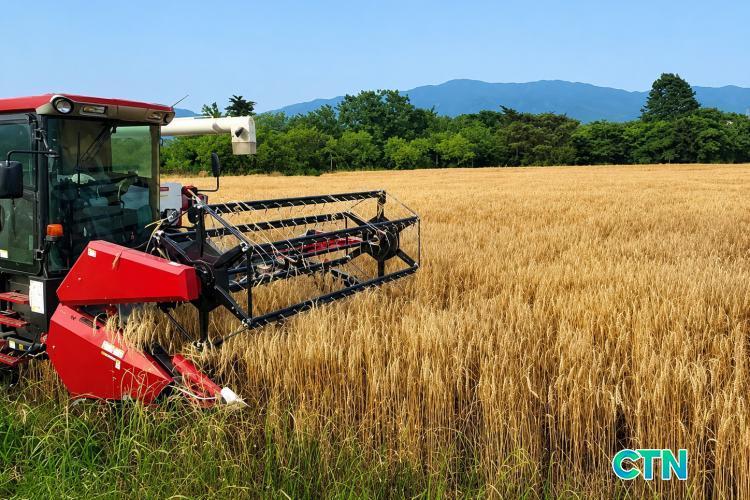
[경주/CTN]이수현 기자= 주낙영 경주시장은 "화랑1호는 경주 기후와 재배환경에 적합하도록 개발한 지역 맞춤형 조사료 신품종"이라면서, "안정적인 종자 생산과 농가 보급을 통해 조사료 자급률을 높이고 축산농가의 경영 부담을 줄일 수 있도록 지원을 확대하겠다"라고 말했다. 경주시는 국립식량과학원과 공동 개발한 조사료용 트리티케일 신품종 '화랑1호'의 생산기반 구축에 나선다고 28일 밝혔다. 밀과 호밀을 교배해 개발한 화랑1호는 추위와 건조에 강하고 생산성이 높아 국내 조사료 자급률 향상과 축산농가의 사료비 절감에 기여할 것으로 기대를 모으고 있다.
시는 지난 2023년 국립식량과학원과 업무협약을 체결한 이후 3년간 신농업혁신타운과 외동읍, 불국동 시험포장에서 생육 특성과 환경 적응성을 검증해왔다. 올해 품종 출원 절차를 으르고 내년부터 외동읍과 불국동 일원 10ha 규모의 채종포에서 본격적으로 종자를 생산해 농가에 공급할 계획이다. 아울러 향후 재배면적을 30ha까지 점진적으로 확대하여 지역 맞춤형 조사료 생산체계를 구축하는 동시에, 혼파기술과 논 2모작 재배기술을 농가에 함께 보급해 기후변화 대응 능력을 높이겠다는 방침이다.
하지만 이처럼 시가 신품종 개발과 농가 보급 계획을 대대적인 농정 성과로 홍보하고 나선 것과 달리, 현장 농민들과 축산 전문가들 사이에서는 전체 축산농가의 사료비 부담을 덜기에는 보급 규모와 속도가 지나치게 미진하다는 비판이 지배적이다. 농업계 전문가들은 사료 가격 폭등으로 당장 도산 위기에 처한 농가들이 속출하는 상황에서, 3년의 연구를 거치고도 내년 첫 보급 면적이 고작 10ha에 불과한 것은 전형적인 생색내기식 보여주기 행정에 불과하다고 꼬집는다. 특히 신품종의 대량 재배를 뒷받침할 종자 가공·유통 저장 시설 같은 필수 인프라 구축 논의는 빠진 채, 단순히 품종 출원 실적만을 앞세워 자급률 향상을 호언장담하는 것은 농가 현실을 외면한 탁상공론이라는 지적에서 자유롭기 어렵다.
이에 따라 단순히 채종포 면적의 수치적 확대에만 안주할 것이 아니라, 관내 전체 축산농가의 사료 수요 데이터를 실시간으로 파악하고 신품종 종자의 배정·수송 과정을 체계적으로 관리하는 디지털 기반 스마트 조사료 수급 플랫폼의 선제적 도입이 시급한 대안으로 거론된다. 나아가 농가들이 거부감 없이 혼파 및 2모작 기술을 수용할 수 있도록 대규모 초기 기술 보조금을 현실화하고, 전문 농업 지도 인력을 일선 농가 현장에 실무적으로 상시 배치해 밀착 기술 지원을 전개해야 한다. 결과적으로 연구실 안에서 이뤄진 신품종 개발 성과를 과신하기보다는, 일반 농가들이 실질적인 생산비 절감 효과를 체감할 수 있도록 대량 공급 체계의 속도감을 높이고 유통 마진을 최소화하는 현장 중심의 농정 혁신이 수반되어야 마땅하다.
[영문번역 기사-AI활용]
Gyeongju City Mayor Joo Nak-young stated, "Hwarang No. 1 is a new regional customized forage variety developed to suit the climate and cultivation environment of Gyeongju. We will expand support to increase the self-sufficiency rate of forage and reduce the management burden on livestock farms through stable seed production and distribution to farms." Gyeongju City announced on the 28th that it will start establishing a production base for 'Hwarang No. 1,' a new variety of triticale for forage jointly developed with the National Institute of Crop Science. Developed by crossing wheat and rye, Hwarang No. 1 is highly resistant to cold and drought and possesses high productivity, raising expectations for improving domestic forage self-sufficiency and reducing feed costs for livestock farms.
Following an MOU signed with the National Institute of Crop Science in 2023, the city has verified growth characteristics and environmental adaptability at testing fields in the New Agricultural Innovation Town, Oedong-eup, and Bulguk-dong for three years. The city plans to go through the variety application process this year and produce and supply seeds to farms starting next year from a 10-hectare seed production field in the Oedong-eup and Bulguk-dong areas. Furthermore, the authorities intend to gradually expand the cultivation area to 30 hectares to establish a regional customized forage production system, while disseminating mixed sowing and double-cropping technologies on paddy fields to enhance climate change response capabilities.
However, despite the city's extensive promotion of the new variety development and distribution plans as major agricultural milestones, agricultural circles and local livestock farmers point out that the scale and speed of distribution are severely insufficient to alleviate the immediate financial burden on livestock farms. Agricultural experts note that while numerous farms are on the verge of bankruptcy due to skyrocketing feed prices, relying on a mere 10-hectare initial distribution area after three long years of research is nothing more than a superficial bureaucratic show. In particular, some sectors point out that declaring self-sufficiency guarantees without presenting concrete investment plans for essential post-harvest processing, storage, and distribution logistics networks is not free from the criticism of failing to address the structural realities of the local agricultural market.
To overcome these structural limitations, the early implementation of a digital community-based smart forage supply management platform that dynamically tracks local feed demand metrics and coordinates the real-time logistics of seed allocation is suggested as an urgent alternative. Furthermore, rather than relying solely on slogan-driven administrative declarations, authorities should prioritize practical administrative support measures, such as substantially increasing initial technology subsidies for mixed sowing and double-cropping practices and practically deploying professional agricultural coordinators on-site for immediate technical guidance. Consequently, rather than overestimating the effects of developing a new variety inside laboratories, prioritizing substantive administrative framework reforms aimed at accelerating the mass-supply timeline and minimizing market distribution margins on-site must be prioritized.
시는 지난 2023년 국립식량과학원과 업무협약을 체결한 이후 3년간 신농업혁신타운과 외동읍, 불국동 시험포장에서 생육 특성과 환경 적응성을 검증해왔다. 올해 품종 출원 절차를 으르고 내년부터 외동읍과 불국동 일원 10ha 규모의 채종포에서 본격적으로 종자를 생산해 농가에 공급할 계획이다. 아울러 향후 재배면적을 30ha까지 점진적으로 확대하여 지역 맞춤형 조사료 생산체계를 구축하는 동시에, 혼파기술과 논 2모작 재배기술을 농가에 함께 보급해 기후변화 대응 능력을 높이겠다는 방침이다.
하지만 이처럼 시가 신품종 개발과 농가 보급 계획을 대대적인 농정 성과로 홍보하고 나선 것과 달리, 현장 농민들과 축산 전문가들 사이에서는 전체 축산농가의 사료비 부담을 덜기에는 보급 규모와 속도가 지나치게 미진하다는 비판이 지배적이다. 농업계 전문가들은 사료 가격 폭등으로 당장 도산 위기에 처한 농가들이 속출하는 상황에서, 3년의 연구를 거치고도 내년 첫 보급 면적이 고작 10ha에 불과한 것은 전형적인 생색내기식 보여주기 행정에 불과하다고 꼬집는다. 특히 신품종의 대량 재배를 뒷받침할 종자 가공·유통 저장 시설 같은 필수 인프라 구축 논의는 빠진 채, 단순히 품종 출원 실적만을 앞세워 자급률 향상을 호언장담하는 것은 농가 현실을 외면한 탁상공론이라는 지적에서 자유롭기 어렵다.
이에 따라 단순히 채종포 면적의 수치적 확대에만 안주할 것이 아니라, 관내 전체 축산농가의 사료 수요 데이터를 실시간으로 파악하고 신품종 종자의 배정·수송 과정을 체계적으로 관리하는 디지털 기반 스마트 조사료 수급 플랫폼의 선제적 도입이 시급한 대안으로 거론된다. 나아가 농가들이 거부감 없이 혼파 및 2모작 기술을 수용할 수 있도록 대규모 초기 기술 보조금을 현실화하고, 전문 농업 지도 인력을 일선 농가 현장에 실무적으로 상시 배치해 밀착 기술 지원을 전개해야 한다. 결과적으로 연구실 안에서 이뤄진 신품종 개발 성과를 과신하기보다는, 일반 농가들이 실질적인 생산비 절감 효과를 체감할 수 있도록 대량 공급 체계의 속도감을 높이고 유통 마진을 최소화하는 현장 중심의 농정 혁신이 수반되어야 마땅하다.
[영문번역 기사-AI활용]
Gyeongju City Mayor Joo Nak-young stated, "Hwarang No. 1 is a new regional customized forage variety developed to suit the climate and cultivation environment of Gyeongju. We will expand support to increase the self-sufficiency rate of forage and reduce the management burden on livestock farms through stable seed production and distribution to farms." Gyeongju City announced on the 28th that it will start establishing a production base for 'Hwarang No. 1,' a new variety of triticale for forage jointly developed with the National Institute of Crop Science. Developed by crossing wheat and rye, Hwarang No. 1 is highly resistant to cold and drought and possesses high productivity, raising expectations for improving domestic forage self-sufficiency and reducing feed costs for livestock farms.
Following an MOU signed with the National Institute of Crop Science in 2023, the city has verified growth characteristics and environmental adaptability at testing fields in the New Agricultural Innovation Town, Oedong-eup, and Bulguk-dong for three years. The city plans to go through the variety application process this year and produce and supply seeds to farms starting next year from a 10-hectare seed production field in the Oedong-eup and Bulguk-dong areas. Furthermore, the authorities intend to gradually expand the cultivation area to 30 hectares to establish a regional customized forage production system, while disseminating mixed sowing and double-cropping technologies on paddy fields to enhance climate change response capabilities.
However, despite the city's extensive promotion of the new variety development and distribution plans as major agricultural milestones, agricultural circles and local livestock farmers point out that the scale and speed of distribution are severely insufficient to alleviate the immediate financial burden on livestock farms. Agricultural experts note that while numerous farms are on the verge of bankruptcy due to skyrocketing feed prices, relying on a mere 10-hectare initial distribution area after three long years of research is nothing more than a superficial bureaucratic show. In particular, some sectors point out that declaring self-sufficiency guarantees without presenting concrete investment plans for essential post-harvest processing, storage, and distribution logistics networks is not free from the criticism of failing to address the structural realities of the local agricultural market.
To overcome these structural limitations, the early implementation of a digital community-based smart forage supply management platform that dynamically tracks local feed demand metrics and coordinates the real-time logistics of seed allocation is suggested as an urgent alternative. Furthermore, rather than relying solely on slogan-driven administrative declarations, authorities should prioritize practical administrative support measures, such as substantially increasing initial technology subsidies for mixed sowing and double-cropping practices and practically deploying professional agricultural coordinators on-site for immediate technical guidance. Consequently, rather than overestimating the effects of developing a new variety inside laboratories, prioritizing substantive administrative framework reforms aimed at accelerating the mass-supply timeline and minimizing market distribution margins on-site must be prioritized.
 |
이수현 기자 leegikook@hanmail.net
|