경기도 난민 지원 조례, 예산 부담·주민 갈등 눈감았나
-경기도, 18일 의정부서 '난민 실태모니터링 착수보고회' 개최... 광역지자체 최초로 생활 실태조사 시동
-도내 난민 1만 8,169명으로 장기체류 외국인의 2.5% 차지... 주거·의료·법률 등 조례 기반 수요 파악
-도내 난민 1만 8,169명으로 장기체류 외국인의 2.5% 차지... 주거·의료·법률 등 조례 기반 수요 파악
김지우 기자입력 : 2026. 06. 19(금) 09:42


사진=경기도청 제공
[경기/CTN]김지우 기자= 김성환 경기도 이민사회지원과장은 "난민들이 사회적 고립이나 빈곤에 처하지 않고 지역사회의 일원으로 살아갈 수 있도록 지원하는 것은 공동체 통합과 갈등 예방 측면에서도 중요하다"며 "조사를 통해 난민 지원제도의 공백과 개선 과제를 발굴하고, 지역별·체류자격별 특성을 반영한 정책 방안을 마련하겠다"고 밝혔다. 지방 자치 행정 당국이 불법 체류 및 비자발적 이주민 증가로 인한 지역 사회의 잠재적 갈등을 관리하고, 자치조례에 기반한 이민자 통합 정책을 선제적으로 수립하기 위해 광역지자체 최초로 난민 대상 정무적 실태조사 거버넌스를 구축했다.
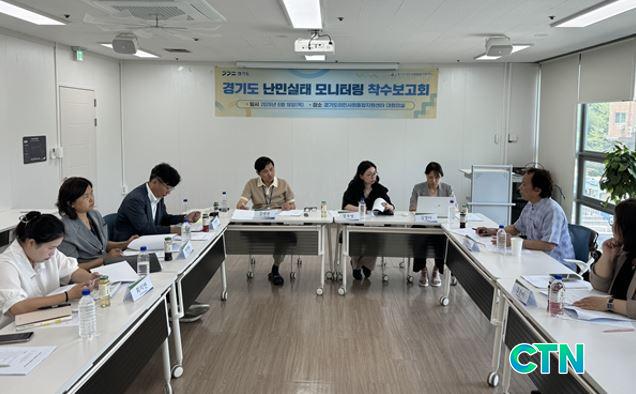
경기도는 의정부시 경기도이민사회통합지원센터에서 '경기도 난민 실태모니터링 착수보고회'를 열고 도내 거주하는 난민들의 구체적인 생활 실태와 정책 수요를 파악하기 위한 연구 용역에 전격 착수했다고 지난 18일 발표했다. 이번 조사는 지난해 제정된 '경기도 난민 인권 보호와 기본생활 보장 조례'를 법적 근거로 삼아 추진되며, 광역자치단체 수준에서 난민만을 타깃으로 한 단독 실태조사를 벌이는 것은 경기도가 전국 최초다. 도의 통계에 따르면 2026년 3월 말 기준 경기도에 등록된 거주 난민은 총 1만 8,169명으로, 도내 장기체류 외국인 인구의 약 2.5%에 달하는 규모다. 도는 난민이 지닌 비자발적 망명이라는 특수성을 감안할 때 기존의 일반 다문화·이주민 복지 정책 매칭만으로는 실무적인 한계가 명확하다고 보고 주거, 교육, 의료, 고용, 법률지원 등 조례에 명시된 5대 핵심 분야를 중심으로 행정 공백을 진단할 계획이다. 구체적으로는 표본 설문조사 130명과 심층면접(FGI) 38명을 병행하여 오는 8~9월 현장 조사를 실시한 뒤 10월 최종 결과를 발표할 예정이며, 지자체 최초로 구성된 '난민 지원 정책 자문위원회'의 7월 밀집 지역 현장 간담회와 연계해 맞춤형 정책 뼈대를 도출하겠다고 청은 덧붙였다.
지방 정부가 중앙 정부의 난민 심사 및 관리 권한 한계를 넘어서서, 실제 지역 사회에 장기 체류 중인 난민들의 인도적 생활 인프라를 자치법규 체계 안으로 포용하고 주거·의료 등 필수 레이어별 미비점을 정무적으로 발굴하려 한 시도는 수요자 중심의 인권 행정 및 선제적 리스크 관리 측면에서 실효성 높은 행정 사례로 풀이된다. 특히 이주민 밀집 지역의 슬럼화와 고립에 따른 사회적 갈등 비용을 예방하기 위해 관내 자문위원회를 현장에 투입하고 체류 자격별로 파편화된 지원 수요를 계량화하려 한 기획은 경기도의 짜임새 있는 정무적 대외 통합 역량이 반영된 결과다.
그러나 일각에서는 이번 조사가 도내에 거주하는 1만 8,000여 명의 방대한 난민 규모에 비해 고작 130명의 설문조사와 38명의 면접이라는 턱없이 부족한 표본 수만을 설정하여 실적 홍보용 생색내기 전시 행정으로 흐르고 있다는 지적도 나온다. 전체 대상자의 1%도 안 되는 극소수의 표본을 가지고 지역별·체류자격별 특성을 반영한 실효성 있는 정책 대안을 발굴하겠다는 교과서적인 명분은 신뢰도가 떨어지기 때문이다. 특히 자치단체 가용 재원이 한정된 상황에서 난민 전용 자문위원회를 가동하고 주거·의료 예산 매칭을 검토하는 행정은 도내 취약계층 주민들과의 복지 역차별 논란 및 외국인 혐오 정서 등 실무적인 대외 갈등을 부추길 우려가 큼에도 이에 대한 정무적 안전장치나 주민 설득 로드맵은 전혀 제시되지 않았다. 세금 낭비 지적을 피할 구체적인 재원 분담 구조나 난민들의 실질적인 불법 취업·치안 문제 등 실무적인 리스크 관리가 선행되지 않는다면, 단순히 보고회를 열고 위원들을 위촉하는 수준의 행정은 결국 주민 반발에 가로막혀 예산만 낭비한 채 표류할 위험이 크다. 이에 따라 경기도는 지자체 최초라는 타이틀에 만족할 것이 아니라, 조사 표본의 범위를 신속히 확대해 통계적 유의성을 확보하는 동시에 난민들의 자립을 유도할 고용 인센티브 체계 등 지속가능한 '상생형 이민 행정 대책'을 시급히 수립해야 할 것이다.
[영문번역 기사-AI활용]
Kim Sung-hwan, Director of the Immigration Social Support Division of Gyeonggi Province, stated, "Supporting refugees so that they can live as members of the local community without falling into social isolation or poverty is crucial in terms of community integration and conflict prevention. Through this survey, we will discover gaps and improvement tasks in the refugee support system and prepare policy measures reflecting regional and status-of-residence characteristics." The local autonomous administrative authority has completely activated a political status survey governance for refugees—a first among wide-area local governments—to manage potential social conflicts caused by the increase in illegal stay and involuntary immigrants, and to establish preemptive immigrant integration policies based on autonomous ordinances.
Gyeonggi Province announced on the 19th that it held the 'Gyeonggi-do Refugee Status Monitoring Launch Briefing' at the Gyeonggi-do Immigration Social Integration Support Center in Uijeongbu-si and fully commenced a research service to figure out the actual living conditions and policy demands of registered refugees residing in the province on the 18th. This survey is promoted based on the 'Gyeonggi-do Ordinance on the Protection of Human Rights and Guarantee of Basic Living of Refugees' enacted last year, making Gyeonggi Province the first among wide-area autonomous governments to conduct a standalone status survey targeting solely refugees. According to provincial statistics, the number of registered refugees residing in Gyeonggi Province as of the end of March 2026 stands at 18,169, accounting for approximately 2.5% of long-term stay foreigners within the province. Considering the unique nature of involuntary exile that refugees possess, the province believes that there are clear practical limits to existing general multicultural and immigrant welfare policy matching alone, and plans to diagnose administrative gaps focusing on five core areas specified in the ordinance: housing, education, medical care, employment, and legal support. Specifically, the province added its political ambition to conduct field surveys in August and September by combining a sample survey of 130 people and focus group interviews (FGI) with 38 people, release the final results in October, and derive a tailored policy backbone in connection with the July field briefing of the 'Refugee Support Policy Advisory Committee,' which was formed for the first time by a local government.
The move where the local government went beyond the central government's limitations in refugee screening and management authority, politically embraced the humanitarian living infrastructure of long-term staying refugees into the autonomous regulatory framework, and tried to find deficiencies in essential layers like housing and medical care, is interpreted as a highly effective administrative case in terms of user-centered human rights administration and preemptive risk management. In particular, deploying the provincial advisory committee directly to the field to prevent social conflict costs stemming from the slumization and isolation of immigrant-dense areas, and attempting to quantify fragmented support demands by status of residence highlights the reflection of Gyeonggi Province's well-structured political external integration capabilities.
Hooking on the issue, however, some critics point out that this survey sets an absurdly insufficient sample size—a survey of a mere 130 people and interviews with 38 people—compared to the massive refugee scale of over 18,000 residing in the province, thus drifting into a government-led show-style administration for performance publicity. This is because the textbook justification of discovering effective policy alternatives reflecting regional and status characteristics with a tiny sample representing less than 1% of the total target population suffers from low statistical reliability. In particular, under circumstances where local available fiscal funds are limited, operating a dedicated advisory committee for refugees and reviewing housing and medical budget matching is highly likely to fuel external practical conflicts—such as controversy over reverse discrimination against low-income local residents and anti-foreigner sentiments—yet a political safety device or resident persuasion roadmap against this is not presented at all. Unless practical risk management—such as a concrete fiscal sharing structure to avoid criticisms of tax waste or addressing the practical illegal employment and security concerns of refugees—is preceded, an administration that simply holds briefings and appoints committee members runs a high risk of drifting away, blocked by resident backlashes while wasting budget. Accordingly, Gyeonggi Province should not be satisfied with the title of being the first local government, but should urgently establish a sustainable 'win-win immigration administrative measure,' such as rapidly expanding the scope of the survey sample to secure statistical significance and linking employment incentive systems to induce the self-reliance of refugees.
경기도는 의정부시 경기도이민사회통합지원센터에서 '경기도 난민 실태모니터링 착수보고회'를 열고 도내 거주하는 난민들의 구체적인 생활 실태와 정책 수요를 파악하기 위한 연구 용역에 전격 착수했다고 지난 18일 발표했다. 이번 조사는 지난해 제정된 '경기도 난민 인권 보호와 기본생활 보장 조례'를 법적 근거로 삼아 추진되며, 광역자치단체 수준에서 난민만을 타깃으로 한 단독 실태조사를 벌이는 것은 경기도가 전국 최초다. 도의 통계에 따르면 2026년 3월 말 기준 경기도에 등록된 거주 난민은 총 1만 8,169명으로, 도내 장기체류 외국인 인구의 약 2.5%에 달하는 규모다. 도는 난민이 지닌 비자발적 망명이라는 특수성을 감안할 때 기존의 일반 다문화·이주민 복지 정책 매칭만으로는 실무적인 한계가 명확하다고 보고 주거, 교육, 의료, 고용, 법률지원 등 조례에 명시된 5대 핵심 분야를 중심으로 행정 공백을 진단할 계획이다. 구체적으로는 표본 설문조사 130명과 심층면접(FGI) 38명을 병행하여 오는 8~9월 현장 조사를 실시한 뒤 10월 최종 결과를 발표할 예정이며, 지자체 최초로 구성된 '난민 지원 정책 자문위원회'의 7월 밀집 지역 현장 간담회와 연계해 맞춤형 정책 뼈대를 도출하겠다고 청은 덧붙였다.
지방 정부가 중앙 정부의 난민 심사 및 관리 권한 한계를 넘어서서, 실제 지역 사회에 장기 체류 중인 난민들의 인도적 생활 인프라를 자치법규 체계 안으로 포용하고 주거·의료 등 필수 레이어별 미비점을 정무적으로 발굴하려 한 시도는 수요자 중심의 인권 행정 및 선제적 리스크 관리 측면에서 실효성 높은 행정 사례로 풀이된다. 특히 이주민 밀집 지역의 슬럼화와 고립에 따른 사회적 갈등 비용을 예방하기 위해 관내 자문위원회를 현장에 투입하고 체류 자격별로 파편화된 지원 수요를 계량화하려 한 기획은 경기도의 짜임새 있는 정무적 대외 통합 역량이 반영된 결과다.
그러나 일각에서는 이번 조사가 도내에 거주하는 1만 8,000여 명의 방대한 난민 규모에 비해 고작 130명의 설문조사와 38명의 면접이라는 턱없이 부족한 표본 수만을 설정하여 실적 홍보용 생색내기 전시 행정으로 흐르고 있다는 지적도 나온다. 전체 대상자의 1%도 안 되는 극소수의 표본을 가지고 지역별·체류자격별 특성을 반영한 실효성 있는 정책 대안을 발굴하겠다는 교과서적인 명분은 신뢰도가 떨어지기 때문이다. 특히 자치단체 가용 재원이 한정된 상황에서 난민 전용 자문위원회를 가동하고 주거·의료 예산 매칭을 검토하는 행정은 도내 취약계층 주민들과의 복지 역차별 논란 및 외국인 혐오 정서 등 실무적인 대외 갈등을 부추길 우려가 큼에도 이에 대한 정무적 안전장치나 주민 설득 로드맵은 전혀 제시되지 않았다. 세금 낭비 지적을 피할 구체적인 재원 분담 구조나 난민들의 실질적인 불법 취업·치안 문제 등 실무적인 리스크 관리가 선행되지 않는다면, 단순히 보고회를 열고 위원들을 위촉하는 수준의 행정은 결국 주민 반발에 가로막혀 예산만 낭비한 채 표류할 위험이 크다. 이에 따라 경기도는 지자체 최초라는 타이틀에 만족할 것이 아니라, 조사 표본의 범위를 신속히 확대해 통계적 유의성을 확보하는 동시에 난민들의 자립을 유도할 고용 인센티브 체계 등 지속가능한 '상생형 이민 행정 대책'을 시급히 수립해야 할 것이다.
[영문번역 기사-AI활용]
Kim Sung-hwan, Director of the Immigration Social Support Division of Gyeonggi Province, stated, "Supporting refugees so that they can live as members of the local community without falling into social isolation or poverty is crucial in terms of community integration and conflict prevention. Through this survey, we will discover gaps and improvement tasks in the refugee support system and prepare policy measures reflecting regional and status-of-residence characteristics." The local autonomous administrative authority has completely activated a political status survey governance for refugees—a first among wide-area local governments—to manage potential social conflicts caused by the increase in illegal stay and involuntary immigrants, and to establish preemptive immigrant integration policies based on autonomous ordinances.
Gyeonggi Province announced on the 19th that it held the 'Gyeonggi-do Refugee Status Monitoring Launch Briefing' at the Gyeonggi-do Immigration Social Integration Support Center in Uijeongbu-si and fully commenced a research service to figure out the actual living conditions and policy demands of registered refugees residing in the province on the 18th. This survey is promoted based on the 'Gyeonggi-do Ordinance on the Protection of Human Rights and Guarantee of Basic Living of Refugees' enacted last year, making Gyeonggi Province the first among wide-area autonomous governments to conduct a standalone status survey targeting solely refugees. According to provincial statistics, the number of registered refugees residing in Gyeonggi Province as of the end of March 2026 stands at 18,169, accounting for approximately 2.5% of long-term stay foreigners within the province. Considering the unique nature of involuntary exile that refugees possess, the province believes that there are clear practical limits to existing general multicultural and immigrant welfare policy matching alone, and plans to diagnose administrative gaps focusing on five core areas specified in the ordinance: housing, education, medical care, employment, and legal support. Specifically, the province added its political ambition to conduct field surveys in August and September by combining a sample survey of 130 people and focus group interviews (FGI) with 38 people, release the final results in October, and derive a tailored policy backbone in connection with the July field briefing of the 'Refugee Support Policy Advisory Committee,' which was formed for the first time by a local government.
The move where the local government went beyond the central government's limitations in refugee screening and management authority, politically embraced the humanitarian living infrastructure of long-term staying refugees into the autonomous regulatory framework, and tried to find deficiencies in essential layers like housing and medical care, is interpreted as a highly effective administrative case in terms of user-centered human rights administration and preemptive risk management. In particular, deploying the provincial advisory committee directly to the field to prevent social conflict costs stemming from the slumization and isolation of immigrant-dense areas, and attempting to quantify fragmented support demands by status of residence highlights the reflection of Gyeonggi Province's well-structured political external integration capabilities.
Hooking on the issue, however, some critics point out that this survey sets an absurdly insufficient sample size—a survey of a mere 130 people and interviews with 38 people—compared to the massive refugee scale of over 18,000 residing in the province, thus drifting into a government-led show-style administration for performance publicity. This is because the textbook justification of discovering effective policy alternatives reflecting regional and status characteristics with a tiny sample representing less than 1% of the total target population suffers from low statistical reliability. In particular, under circumstances where local available fiscal funds are limited, operating a dedicated advisory committee for refugees and reviewing housing and medical budget matching is highly likely to fuel external practical conflicts—such as controversy over reverse discrimination against low-income local residents and anti-foreigner sentiments—yet a political safety device or resident persuasion roadmap against this is not presented at all. Unless practical risk management—such as a concrete fiscal sharing structure to avoid criticisms of tax waste or addressing the practical illegal employment and security concerns of refugees—is preceded, an administration that simply holds briefings and appoints committee members runs a high risk of drifting away, blocked by resident backlashes while wasting budget. Accordingly, Gyeonggi Province should not be satisfied with the title of being the first local government, but should urgently establish a sustainable 'win-win immigration administrative measure,' such as rapidly expanding the scope of the survey sample to secure statistical significance and linking employment incentive systems to induce the self-reliance of refugees.
 |
김지우 기자 ymjs790729@naver.com
김지우 기자 입니다. |