경주시, 수초 번식 방치하다 혈세 낭비 지적
-사업비 2억 원 투입해 1만 3,000㎡ 면적 수초 제거… 7~8월 집중 정비
-매월 유입·유출구 수질 검사에 고작 900만 원 편성… 근본적 정화 대책은 빠져
-매월 유입·유출구 수질 검사에 고작 900만 원 편성… 근본적 정화 대책은 빠져
이수현 기자입력 : 2026. 06. 23(화) 16:53


사진=경주시청 제공
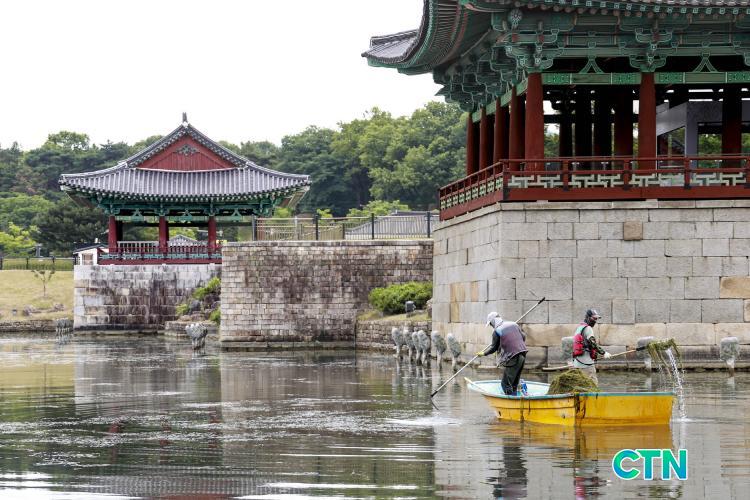
[경주/CTN]이수현 기자= 주낙영 경주시장은 "동궁과 월지는 신라 왕경의 역사와 문화를 대표하는 소중한 문화유산"이라며 "체계적인 수질 관리와 수초 정비를 통해 동궁과 월지의 품격을 높이고 시민과 관광객 모두가 더욱 쾌적하게 즐길 수 있는 역사문화 공간으로 가꿔 나가겠다"고 말했다. 경주시는 동궁과 월지의 경관 관리와 수질 개선을 위해 4월부터 11월까지 사업비 2억 원을 투입해 수초 제거 작업을 추진하고, 12월까지 900만 원의 예산으로 연 10회 수질 검사를 실시한다고 발표했으나, 정작 연못 유적의 고질적인 수원 오염을 해결할 근본적인 정화 시설 확충 없이 단편적인 인력 동원식 정비에만 치중했다는 비판이 일고 있다. 이번 사업은 신라 왕궁의 별궁 유적인 동궁과 월지 내 1만 3,000㎡ 규모를 대상으로 연간 10회에 걸쳐 수초를 제거하고, 매월 셋째 주 유입구와 유출구의 수질 상태를 점검해 변화 추이를 분석하는 절차로 진행된다.
특히 올해는 수초 번식이 집중되는 7~8월에 월 2회로 작업을 확대하며 경관 저해 민원에 대응하겠다고 대대적으로 홍보에 나섰지만, 이는 수온 상승과 오수 유입으로 발생하는 녹조 및 악취의 원인을 차단하는 것이 아닌 눈에 보이는 풀만 깎아내는 사후약방문식 대책일 뿐이라는 지적이다. 최근 기후변화로 인한 수생태계 교란이 심화되는 상황에서 단 900만 원의 예산으로 분석 자료만 축적하는 연례행사성 수질 검사에 머무를 뿐, 유입수의 고도 정화 공정을 도입하거나 상시 수환 시스템을 구축하는 등의 실질적인 인프라 개선 노력이 보이지 않는다는 점은 전시 행정의 단면을 보여준다.
이러한 보여주기식 정비의 한계를 넘어서려면 단순 인력 수거에 그칠 것이 아니라, 수질 검사 데이터를 실시간으로 연계해 오염도를 자동 예측하고 수류를 순환시키는 "AI 기반 스마트 수생태계 통합 제어 시스템"을 유적지 내에 구축해야 한다. 나아가 사후 수초 제거에 예산을 반복 투입하기보다, 연못 바닥의 퇴적 오니를 전면 준설하고 외부 오염원 유입을 원천 차단하는 차집관로 정비 등 실무형 행정 지원책을 선행해야만 대한민국 대표 유적지의 역사적 품격과 생태 안전을 실질적으로 담보할 수 있을 것이다.
[영문번역 기사-AI활용]
Joo Nak-young, Mayor of Gyeongju City, stated, "Donggung Palace and Wolji Pond are precious cultural heritages representing the history and culture of the Silla royal capital. Through systematic water quality management and aquatic plant maintenance, we will elevate the dignity of Donggung and Wolji and cultivate it into a historical and cultural space that both citizens and tourists can enjoy more comfortably." Although Gyeongju City announced that it would invest 200 million KRW from April to November to remove aquatic plants and spend 9 million KRW until December to conduct water quality tests 10 times a year to manage the landscape and improve water quality at Donggung and Wolji, criticisms are rising that the city focused merely on short-term, labor-mobilizing maintenance without any fundamental measures such as expanding advanced purification facilities to solve the chronic water pollution of the historic pond. This project proceeds through procedures to clear aquatic plants across an area of 13,000 ㎡ for 10 times a year and analyze trends by checking water quality at inlets and outlets every third week of the month.
Particularly this year, the city promoted that it would expand operations to twice a month during July and August, when aquatic plants propagate intensively, to respond to civil complaints regarding landscape degradation. However, critics point out that this is merely a makeshift post-outbreak measure that mows down visible weeds rather than blocking the fundamental causes of algae blooms and foul odors triggered by rising water temperatures and wastewater influx. Amid the worsening disruption of the aquatic ecosystem driven by recent climate change, the city limits itself to annual event-style responses like minor testing budgets that merely accumulate analytical data. The lack of practical infrastructure improvements—such as introducing advanced purification processes for inflowing water or establishing an emergency water circulation system—plainly exposes the reality of its exhibition administration.
To overcome the limitations of such show-style maintenance, the city must move beyond simple manual collection and instead establish an "AI-based Smart Aquatic Ecosystem Integrated Control System" within the heritage site that linked water quality test data in real time to automatically predict pollution levels and circulate water currents. Furthermore, rather than repeatedly injecting budget into post-outbreak weed removal, the city should prioritize practical administrative support measures, such as thoroughly dredging deposited sludge from the pond bed and restructuring intercepting sewers to fundamentally block external pollution sources, to substantially guarantee the historical dignity and ecological safety of Korea's representative heritage site.
특히 올해는 수초 번식이 집중되는 7~8월에 월 2회로 작업을 확대하며 경관 저해 민원에 대응하겠다고 대대적으로 홍보에 나섰지만, 이는 수온 상승과 오수 유입으로 발생하는 녹조 및 악취의 원인을 차단하는 것이 아닌 눈에 보이는 풀만 깎아내는 사후약방문식 대책일 뿐이라는 지적이다. 최근 기후변화로 인한 수생태계 교란이 심화되는 상황에서 단 900만 원의 예산으로 분석 자료만 축적하는 연례행사성 수질 검사에 머무를 뿐, 유입수의 고도 정화 공정을 도입하거나 상시 수환 시스템을 구축하는 등의 실질적인 인프라 개선 노력이 보이지 않는다는 점은 전시 행정의 단면을 보여준다.
이러한 보여주기식 정비의 한계를 넘어서려면 단순 인력 수거에 그칠 것이 아니라, 수질 검사 데이터를 실시간으로 연계해 오염도를 자동 예측하고 수류를 순환시키는 "AI 기반 스마트 수생태계 통합 제어 시스템"을 유적지 내에 구축해야 한다. 나아가 사후 수초 제거에 예산을 반복 투입하기보다, 연못 바닥의 퇴적 오니를 전면 준설하고 외부 오염원 유입을 원천 차단하는 차집관로 정비 등 실무형 행정 지원책을 선행해야만 대한민국 대표 유적지의 역사적 품격과 생태 안전을 실질적으로 담보할 수 있을 것이다.
[영문번역 기사-AI활용]
Joo Nak-young, Mayor of Gyeongju City, stated, "Donggung Palace and Wolji Pond are precious cultural heritages representing the history and culture of the Silla royal capital. Through systematic water quality management and aquatic plant maintenance, we will elevate the dignity of Donggung and Wolji and cultivate it into a historical and cultural space that both citizens and tourists can enjoy more comfortably." Although Gyeongju City announced that it would invest 200 million KRW from April to November to remove aquatic plants and spend 9 million KRW until December to conduct water quality tests 10 times a year to manage the landscape and improve water quality at Donggung and Wolji, criticisms are rising that the city focused merely on short-term, labor-mobilizing maintenance without any fundamental measures such as expanding advanced purification facilities to solve the chronic water pollution of the historic pond. This project proceeds through procedures to clear aquatic plants across an area of 13,000 ㎡ for 10 times a year and analyze trends by checking water quality at inlets and outlets every third week of the month.
Particularly this year, the city promoted that it would expand operations to twice a month during July and August, when aquatic plants propagate intensively, to respond to civil complaints regarding landscape degradation. However, critics point out that this is merely a makeshift post-outbreak measure that mows down visible weeds rather than blocking the fundamental causes of algae blooms and foul odors triggered by rising water temperatures and wastewater influx. Amid the worsening disruption of the aquatic ecosystem driven by recent climate change, the city limits itself to annual event-style responses like minor testing budgets that merely accumulate analytical data. The lack of practical infrastructure improvements—such as introducing advanced purification processes for inflowing water or establishing an emergency water circulation system—plainly exposes the reality of its exhibition administration.
To overcome the limitations of such show-style maintenance, the city must move beyond simple manual collection and instead establish an "AI-based Smart Aquatic Ecosystem Integrated Control System" within the heritage site that linked water quality test data in real time to automatically predict pollution levels and circulate water currents. Furthermore, rather than repeatedly injecting budget into post-outbreak weed removal, the city should prioritize practical administrative support measures, such as thoroughly dredging deposited sludge from the pond bed and restructuring intercepting sewers to fundamentally block external pollution sources, to substantially guarantee the historical dignity and ecological safety of Korea's representative heritage site.
 |
이수현 기자 leegikook@hanmail.net
|