[인터뷰]이병도 충남교육청 교육감 "도민이 교육의 주인이 되는 시대" 열터
'도민 교육주권' 기치 아래 교권 보호·기초학력·AI 미래교육 대전환 착수
교권보호관 신설, 학생 도서바우처, 과밀학급 및 작은학교 해법 등 충남 교육 현안 완벽 해법 제시
교권보호관 신설, 학생 도서바우처, 과밀학급 및 작은학교 해법 등 충남 교육 현안 완벽 해법 제시
한성진 기자입력 : 2026. 09. 12(토) 13:54


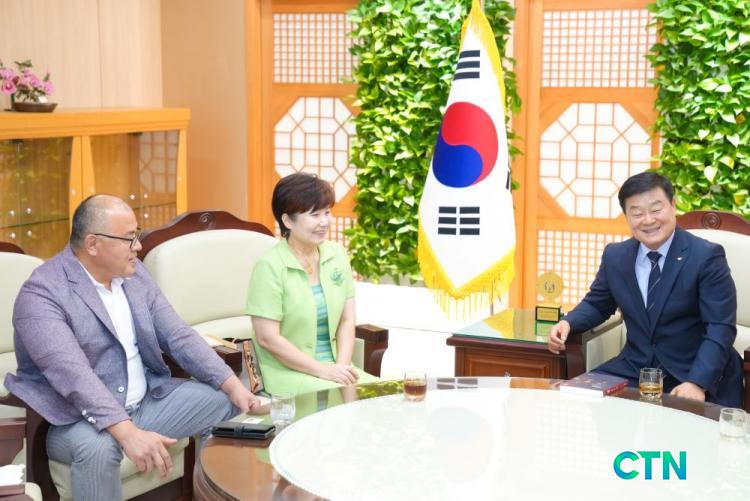
[인터뷰]이병도 충남교육청 교육감 "도민이 교육의 주인이 되는 시대" 열터(사진 좌측부터 한성진 기자. 감정은 기자, 이병도 교육감)/사진=충남교육청 제공
[CTN/인터뷰]한성진 기자·감정은 기자= 대한민국 최고의 인터넷신문 CTN과 참교육을 선도하는 충남교육신문은 급변하는 시대적 전환기 속에서 충남교육의 새로운 미래 좌표를 바로 세우고, 지속 가능한 교육 생태계를 일구기 위해 다각적인 노력을 기울이고 있는 이병도 충남교육감을 만났다.
이병도 교육감은 취임 이후 ‘현장에 답이 있다’는 명확하고 확고한 신념 아래 충남 15개 시·군 현장을 직접 발로 뛰며 도민, 학부모, 교직원들과의 밀착 소통을 이어왔다.
수십 차례의 정책협약과 간담회를 통해 현장의 생생한 목소리를 경청한 그는, 도민이 단순한 정책 소비자를 넘어 교육 운용의 실질적 주체로 서는 ‘도민 교육주권 시대’의 개막을 선언했다.
이는 교육 공동체 모두의 존엄성을 존중하고, 약속한 공약을 실천으로 증명하겠다는 강한 의지의 표명이다.
특히 이 교육감은 취임 후 1호 결재로 ‘교권보호관’ 신설을 추진하여, 교사가 안심하고 교육활동에 전념할 수 있는 원스톱 통합지원 체계를 전격 가동했다.
이는 교권 보호를 넘어 학생들의 안전한 학습권을 지키기 위한 선행 과제라는 소신에서 비롯된 정밀한 현장 맞춤형 정책이다.
나아가 충남 모든 학생에게 연간 10만 원 상당의 도서 구입비를 지역화폐로 지원하는 '충남 학생 도서바우처' 사업을 통해 문해력 신장과 지역 동네 서점 살리기가 선순환하는 전국 최고 수준의 독서교육 모델을 구축하고 있다.
이와 함께 도시 지역(천안·아산)의 과밀학급 해소를 위한 단기·중장기 입체적 대응, 농어촌 작은 학교를 지역의 거점으로 살려내는 공유학교·공동교육과정 운영, AI 시대 교육격차를 줄이는 15개 시·군 'AI 교육 특화 미래 배움터' 조성, 그리고 단 한 명의 아이도 배움에서 소외되지 않도록 돕는 '온채움 시스템' 기반의 기초학력 회복 정책까지 충남교육이 안고 있는 당면 현안들에 대해 명확하고 구체적인 해법을 제시하고 있다.
CTN과 충남교육신문 한성진 편집국장과의 감정은 충남취재본부장의 대담으로 진행된 이번 인터뷰에서는 충남교육의 새로운 미래를 설계하고 '충남의 모든 아이가 차별 없이 꿈을 펼칠 수 있는 상생과 책임의 학교'를 만들어 가기 위한 이병도 교육감의 교육 철학, 핵심 정책의 추진 방향 및 구체적 실행 방안을 심도 있게 다룬다.
[인터뷰 ]
Q1. 선거기간 강조한 “도민 교육주권 시대”의 의미는?
'현장이 답이다'라는 신념 아래 출마 선언 이후 15개 시군을 돌며 150여 차례의 정책협약과 간담회를 통해 도민들의 제안을 경청하는 데 집중했습니다. 이러한 과정은 직접 도민들이 교육에 관한 의견을 제안할 수 있는 소통의 장으로 진행되었고, 도민이 직접 참여하여 제안하는 정책은 공약으로 반영되었습니다. 도민이 제안한 정책이 공약이 되는, 도민이 교육 정책 운용의 주체가 되는 시대가 바로 제가 제안한 '도민 교육주권 시대'입니다.
이는 단순히 표를 얻기 위한 공약이 아니었습니다. 실행력이 강한 교육감 당선인으로서, 제가 평생 지켜온 ‘교육 공동체 모두의 존엄’을 정책으로 증명하는 과정입니다. 앞으로 도민과 함께 소통하며 공약을 실행하는 모습을 통해, '도민 교육주권 시대'를 완성해 나갈 것입니다. 이를 위해 '타운홀미팅' 등 지속적인 경청과 소통의 자리를 마련하고자 합니다. 실행력 있는 교육감으로서 정책을 실천으로 증명하며, '충남 도민 교육주권 시대'를 힘차게 열어 나가겠습니다.
Q2. 교권 보호관 신설의 배경과 의미는?
교권 보호와 관련하여 가장 먼저 짚어보아야 할 것은 교권 보호가 교사의 권리만을 위한 것이 아닌, 안전한 교육환경 속에서 학생들의 학습권을 지키기 위한 선행 과제라는 점입니다. 저는 교육 현장에서 오랜 시간 함께하며 이 문제에 대해 끊임없이 고민해 왔고, 현장 지원방안으로 이미 교권보호관 제도를 구상하고 실현하기 위한 구체적인 계획을 설계하고 있었습니다.
현재 우리 교육 현장에서 교육활동 침해, 악성 민원, 아동학대 신고, 학부모 갈등 등 교권 사안이 발생했을 경우, 즉각적인 대응의 한계로 인해 교육활동이 위축되는 안타까움이 반복되고 있습니다. 교권보호관은 이러한 교육 현황을 정확히 진단해 현장 선생님들을 즉각 지원할 수 있게 계획하였으며, 교육활동의 주체인 교사가 안심하고 수업에 전념하도록 현장 맞춤형 해결책으로 추진 중입니다.
취임 후 1호로 '교권보호관 추진단'을 결재하여 교권보호관 신설에 따른 조직·인력·업무체계를 구체적으로 구성하고, 교육활동 보호 정책 및 피해 교원 지원 기능 강화 방안을 수립하였으며, 9월1일자로 정식 출범하였습니다. 교권보호관은 전체를 총괄하며, 법률·조사·조정·상담·현장 대응 기능을 갖춘 전문 인력을 배치해 전문적 지원을 강화합니다. 또한 교육활동 침해 사안에 신속한 초기 대응부터 회복 지원까지 원스톱으로 처리하는 통합지원 체계를 구축해 추진하고자 합니다. 충남교육청의 교권보호관은 현장 교사를 가장 먼저, 가장 가까이에서 지원하며 ‘교육활동’이 존중되는 학교 문화를 안착시키겠습니다.
Q3. 공약과 연계해 추진할 최대 역점 사업을 소개한다면.
안전한 교육활동 보호를 위한 '교권보호관'과 함께 공약과 연계해 추진할 최대 역점 사업으로는 '충남 학생 도서바우처' 사업이 있습니다. 충남의 모든 학생에게 연간 10만 원 상당의 도서 구입비를 '지역화폐' 형태로 매년 지원하는 정책으로, 아이들이 스스로 서점을 찾아 책을 고르고 가까이하는 습관을 길러줌으로써 문해력과 독서 기반 기초학력을 근본적으로 끌어올리는 근본적 교육 처방입니다.
저는 독서야말로 모든 학습의 출발점이자 미래 역량의 바탕이라고 생각합니다. 미래 사회를 주도하는 AI 시대에도 질문하는 힘, 읽고 판단하는 힘, 타인의 생각을 이해하는 힘은 결국 독서에서부터 시작됩니다. 문해력과 기초학력 신장이 급선무인 초등학교 저학년부터 시작해 지역화폐형 도서바우처를 지원해, 아이들이 자기 책을 고르고, 읽고, 토론하는 경험을 일상으로 만들고자 합니다.
도서바우처를 지역화폐와 연결하면 지역 서점, 더 나아가 지역경제에도 도움이 됩니다. 문해력 신장과 함께 위기에 처한 동네 서점에 활력을 불어넣어 ‘교육과 지역 경제가 함께 성장하는 선순환 구조’를 만들고, 충남을 전국 최고의 독서 교육 메카로 확실히 자리매김할 것입니다.
Q4. 과밀학급 해소와 농어촌 작은학교 육성 문제를 어떻게 풀어갈 생각인가?
충남은 도시의 인구 밀집과 농어촌의 학령 인구 급감이 맞물린 복합적인 교육격차 문제를 안고 있습니다. 저는 천안교육장을 지내며 이 문제를 가장 가까이에서 고민해 왔고, 지역 맞춤형 정책으로 '차이'를 '특색과 상생의 기회'로 전환하는 방안을 모색했습니다.
천안과 아산 지역의 '과밀학급'은 학교 신설에만 의존하지 않고, 다각적이고 신속하게 해결하는 방안을 도입하고자 검토하고 있습니다. 불당동과 청당동 등에 우선 통학버스 지원과 같은 긴급 처방, 인근 빌딩이나 유휴 시설을 유연하게 활용하는 캠퍼스형 분교와 같은 단기 정책, 학교 신설과 같은 중장기 정책으로 개발지구의 과밀학급과 원거리 통학 문제를 해결하기 위해 체계적으로 접근하고 있습니다.
또한, 농어촌 지역의 학생 수 감소와 교육과정 선택권 문제는 새로운 시각으로 접근합니다. 작은 학교를 없애는 방법이 아닌, 지역의 거점으로 살리는 방안으로 거점학교와 특화학교, 공유학교를 연결해 아이들이 다양한 수업과 체험을 함께 누리게 합니다. 학교 간 공동 교육과정, 방과 후 프로그램 연계 운영은 선택형 교육을 확대해 교육 경쟁력 강화에 큰 힘이 되어줍니다. 지역을 지키는 마지막 가장 소중한 공공 인프라로서의 학교, 충남교육이 먼저 앞장서서 그 가치를 지키겠습니다.
Q5. 기초학력 격차 우려에 대한 방안은?
현장에서 기초학력 향상이 실제로 작동하려면 먼저 아이가 왜 배우지 못하는지 정확히 봐야 합니다. 읽기 곤란인지, 정서·행동의 어려움인지, 가정환경인지, 이주배경 학생의 학습언어 문제인지 원인이 다양하기에 모두 같은 보충 학습만으로 해결되지 않습니다.
이를 위해 우선 복합적 원인을 진단하고, 각 원인에 맞는 맞춤형 지원이 필요합니다. 충남교육은 기초학력 학생 맞춤형 지원을 위해 온채움 시스템 기반 복합요인 진단과 처방을 강화하여 추진하고 있습니다. 온채움 시스템 고도화를 통해 저해 요인별 맞춤형 지원을 강화해 학생들의 학습의 힘을 길러낼 수 있도록 집중 지원하고자 합니다.
이와 함께 기초학력 전담교사, 학습지원 패스포트, 퇴직 교사와 대학생 멘토 튜터풀을 연결해 학년이 바뀌어도 연결된 지원으로 지속 성장을 지원하고자 합니다. 또한 방학 중에는 거점형 학업도약캠프를 운영해 사교육을 받는 아이와 그렇지 못한 아이의 교육 경험 차이가 발생하지 않도록 공교육이 앞장서겠습니다. 낙인찍는 정책이 아닌, 회복을 돕는 기초학력 정책으로 한 명 한 명의 아이도 배움에서 소외되지 않도록 지키겠습니다.
Q6. 인공지능(AI) 교육 현장 안착을 위한 지원책은?
AI 교육에서 가장 중요한 것은 많은 장비도 중요하지만, 어느 지역의 아이든 같은 수준의 미래 교육을 누리게 하는 것입니다. AI가 또 다른 사교육 격차가 되지 않도록, 도농 복합 지역인 충남의 특성에 맞게 15개 시군별 AI 교육 특화 미래 배움터를 조성하고자 합니다.
이미 구축된 AI센터를 토대로 학생 개인의 학습 상황을 안전하게 진단하고 지원하는 충남형 AI 학습지원 체계를 구축하고자 합니다. 이 배움터를 통해 학교 수업과 방과후, 진로 체험을 연결하여 미래 사회에 대응할 수 있는 역량 함양의 기회를 마련하는데 교육 역량을 집중할 계획입니다.
다만 기술이 교육의 주인이 되어서는 안 됩니다. AI시대 교육 혁신의 중심에는 교사가 있습니다. 교사가 교육과정을 설계하고, AI는 아이의 배움과 교사의 수업을 돕는 도구가 되어야 합니다. 지식을 전달하는 체계를 넘어 AI와 함께 살아갈 미래 세대의 역량을 키우는 방향으로 충남교육도 근본적인 전환을 이루겠습니다.
Q7. 고교학점제와 내신5등급제에 대한 교육감님의 의견은?
고교학점제는 학습에 대한 학생 주도성을 시스템 차원에서 끌어내고, 진로와 미래에 대해 진지한 고민을 할 수 있도록 마련된 교육 제도입니다. 다만, 평가 제도부터 다층적 차원의 준비가 현실적이지 못하여 현장의 어려움과 아쉬움이 있습니다. 충남교육은 온라인학교, 공동교육과정 등을 활발하게 운영해 소규모 학교 및 농어촌 지역의 과목 선택권을 보장하며 안착해 나가고 있습니다.
내신 5등급제는 고교학점제와 분리된 정책입니다. 원래 고교학점제 완전 도입에 발맞춰 성취평가제(절대평가)로 대체하려 했으나, 5등급제를 도입해 내신 경쟁 및 낙인효과 등 현장의 어려움을 야기하고 있습니다. 충남교육은 5등급제의 폐해를 보완하고 성취평가제 중심의 과정 중심 평가 체계 구축을 위해 교육 관계 기관과 지속 협력하겠습니다.
Q8. 교육재정을 효율적으로 운영하고 재정 건전성을 높이기 위한 방안은?
최근 세수 여건의 변화와 경제 불확실성으로 교육재정이 쉽지 않습니다. 그러나 충남교육은 ‘학생 중심의 효율적 재정 운용’을 과감하게 추진하고자 합니다. 유사·중복 사업은 과감히 조정하고 관행적·효과성 낮은 대형 사업을 점검해 불필요한 예산 증액을 억제하겠습니다.
하지만 예산 절감을 이유로 학생 안전, 기초학력 보장, 돌봄, 미래형 맞춤 교육 배움터 투자가 위축되어서는 안 됩니다. 절감된 재원은 교실 수업 지원과 교육 격차 해소, 교권 보호에 집중 투입하겠습니다. 주민참여예산제 확대와 집행 과정 공개로 도민과의 신뢰를 최고 수준으로 높이겠습니다.
Q9. 충남도와 도의회와의 소통·협력 방안은?
충남교육청과 충남도청, 충남도의회는 충남교육의 발전과 아이들의 미래를 위해 함께 책임을 다할 동반자입니다. '먼저 찾아가는 소통'과 '함께 공감하는 정책 실현'을 실천하겠습니다.
주요 정책 집행 전부터 도의회 교육위원회와 긴밀하게 소통하는 협력 체계를 강화하고, 현안 발생 시 실무진 간 소통 채널을 상시 가동하겠습니다. 진정성 있는 경청과 원칙 있는 협력을 통해 충남의 미래를 함께 열어가겠습니다.
Q10. 인터뷰를 마치며 도민들께 하시고 싶은 말씀이 있다면?
'교육은 제도가 아니라 한 아이의 삶을 바꾸는 일'이라는 교육 신념을 바탕으로, 아이 한 명 한 명의 삶과 가능성을 중심에 두는 '사람 중심의 따뜻한 학교'를 만들겠습니다.
기초학력은 회복되고, 선생님은 수업 연구에 집중하고, 아이들은 안전하게 성장하는 충남교육. "충남에서는 어느 곳에서 태어나고 자란 아이라도 차별 없이 자신의 꿈을 마음껏 펼칠 수 있게 되었다"라는 약속을 반드시 행동과 실천으로 지키겠습니다./대담: 한성진 편집국장 / 정리: 감정은 충남취재본부장
[영문 번역-ai]
[Interview] Lee Byung-do, Superintendent of Chungnam Office of Education: "An Era Where Citizens Own Education… Leading a Major Transformation of Field-Centered Chungnam Education"
[Subtitle 1]
Initiating Great Shifts in Teacher Rights, Basic Learning, and AI Future Education Under 'Citizens' Educational Sovereignty'
[Subtitle 2]
Presenting Complete Solutions for Chungnam Educational Issues: Creating Teacher Protection Officers, Student Book Vouchers, Overcrowded Classes, and Small Rural Schools
[Editor's Note - Expanded 1-Page Lead]
CTN, South Korea's leading internet news outlet, and the Chungnam Education Newspaper, a pioneer in advocating true education, met with Lee Byung-do, Superintendent of the Chungnam Office of Education. Superintendent Lee is making multifaceted efforts to set a new direction for Chungnam education and build a sustainable educational ecosystem amid a rapidly changing era.
Since taking office, Superintendent Lee has maintained close communication with residents, parents, and school staff by visiting all 15 cities and counties in Chungnam under the clear conviction that "the answer lies in the field." After listening to vivid voices from the ground through dozens of policy agreements and meetings, he declared the opening of the "Era of Citizens' Educational Sovereignty," where residents move beyond being simple consumers of policy to become actual leaders in educational operations. This declaration reflects his strong determination to honor the dignity of all members of the educational community and to prove his campaign promises through action.
Notably, as his first official act upon taking office, Superintendent Lee approved the creation of the 'Teacher Rights Protection Officer.' This initiative established a comprehensive one-stop support system that allows teachers to focus on their educational activities with peace of mind. This field-customized policy stems from his firm belief that protecting teacher rights is a prerequisite for safeguarding students' right to learn in a safe environment. Furthermore, through the 'Chungnam Student Book Voucher' program, which provides all students in Chungnam with 100,000 KRW annually in local currency to purchase books, he is constructing a nation-leading reading education model that creates a virtuous cycle between boosting literacy and revitalizing local bookstores.
In addition, Superintendent Lee presents clear and concrete solutions to pressing issues in Chungnam education: multi-layered approaches to alleviate overcrowded classrooms in urban areas (Cheonan and Asan); operating shared schools and joint curricula to preserve small rural schools as regional hubs; establishing 'AI Education Specialized Future Learning Centers' across all 15 cities and counties to bridge digital divides; and advancing the 'On-Chaeum System' to restore basic academic achievement so that no single child is left behind.
In this interview, conducted by Editor-in-Chief Han Sung-jin and summarized by Gam Jeong-eun, Head of the Chungnam Bureau, we take an in-depth look at Superintendent Lee Byung-do's educational philosophy, core policy directions, and execution plans to design a bright future for Chungnam education and create "schools of coexistence and responsibility where every child in Chungnam can pursue their dreams without discrimination."
[Interview Content]
1. What is the meaning of the "Era of Citizens' Educational Sovereignty" emphasized during the election?
Based on the belief that "the answer lies in the field," I focused on listening to residents' proposals through around 150 policy agreements and meetings across 15 cities and counties after announcing my candidacy. This process served as a forum for communication where citizens could directly propose their ideas, and those proposals were reflected in my campaign promises. The era in which policies proposed by citizens become campaign promises and where residents become the main subjects of educational policy management is precisely the "Era of Citizens' Educational Sovereignty."
This was not merely a promise to win votes. As a superintendent with strong execution power, it is a process of proving through policy "the dignity of all members of the educational community," a principle I have held throughout my life. Moving forward, I will complete this era by continuously communicating with residents and fulfilling promises. To this end, I intend to provide continuous opportunities for listening and dialogue through town hall meetings. As an executive superintendent, I will prove policy through action and vigorously open the "Era of Chungnam Citizens' Educational Sovereignty."
2. What is the background and significance of establishing the Teacher Rights Protection Officer?
The first point to address regarding teacher rights protection is that it is not solely for the rights of teachers, but a prerequisite for protecting students' right to learn within a safe environment. Having spent a long time in the educational field, I have continuously pondered this issue and had already designed a concrete plan to realize the Teacher Rights Protection Officer system as a field-support measure.
Currently, when educational activity infringements, malicious complaints, child abuse reports, or parent disputes occur in schools, educational activities are repeatedly discouraged due to the limitations of immediate response. The Teacher Rights Protection Officer was planned to accurately diagnose these situations and provide immediate assistance, serving as a customized solution so teachers can focus on teaching with peace of mind.
As my first official approval upon taking office, I signed off on the 'Teacher Rights Protection Task Force' to structure the organization, personnel, and operational framework, strengthening policies to protect educational activities and support victimized teachers. It officially launched on September 1. The Teacher Rights Protection Officer oversees the overall operations, deploying specialized personnel equipped with legal, investigative, mediation, counseling, and field-response capabilities. We aim to establish a one-stop integrated support system from swift initial response to recovery. The Chungnam Office of Education's Teacher Rights Protection Officer will support teachers first and closest to the field, anchoring a school culture where educational activities are respected.
3. What is the main flagship project to be implemented in connection with your promises?
Along with the 'Teacher Rights Protection Officer' for safe educational activities, the flagship project to be pursued is the 'Chungnam Student Book Voucher' program. This policy annually provides approximately 100,000 KRW worth of book purchase funds in the form of local currency to every student in Chungnam. It serves as a fundamental educational prescription that raises literacy and basic academic skills based on reading by instilling the habit of visiting local bookstores and choosing books.
I believe reading is the starting point of all learning and the foundation for future competencies. Even in the AI era, the power to question, read and judge, and understand others' thoughts originates from reading. Starting with lower primary grades, where literacy and basic academic growth are urgent, we aim to make choosing, reading, and discussing books an everyday experience through local currency book vouchers.
Connecting book vouchers with local currency benefits local bookstores and the local economy. It injects vitality into struggling neighborhood bookstores while boosting literacy, creating a 'virtuous cycle where education and the local economy grow together,' firmly establishing Chungnam as the nation's top hub for reading education.
4. How do you plan to resolve overcrowded classes and nurture small rural schools?
Chungnam faces complex educational gap issues resulting from urban population density combined with a sharp decline in the school-age population in rural areas. Having served as the Superintendent of Cheonan Education Support Office, I pondered this issue up close and sought ways to turn 'differences' into 'opportunities for specialization and coexistence' through tailored regional policies.
To address overcrowded classes in Cheonan and Asan, we are reviewing swift and multi-faceted solutions rather than relying solely on building new schools. We are systematically approaching the issue through emergency measures like supporting school buses in areas such as Buldang-dong and Cheongdang-dong, short-term policies like campus-style branch schools utilizing nearby buildings or vacant facilities, and mid-to-long-term policies like constructing new schools.
Furthermore, we approach the decline in rural student numbers and course choice rights from a new perspective. Instead of closing small schools, we connect them as hub schools, specialized schools, and shared schools to revitalize them as regional bases, allowing students to enjoy diverse classes and experiences together. Joint curricula between schools and linked after-school programs expand elective education and strengthen educational competitiveness. As schools are the last and most precious public infrastructure protecting local communities, the Chungnam Office of Education will take the lead in safeguarding their value.
5. What are the plans to address concerns regarding the basic academic achievement gap?
For basic academic improvement to work in practice, we must first accurately diagnose why a child experiences learning difficulties. Causes vary—ranging from reading difficulties, emotional and behavioral challenges, home environments, to learning language barriers for multicultural students—so uniform supplementary lessons cannot solve the problem.
Therefore, we must diagnose complex causes and provide tailored support matching each cause. Chungnam Education is strengthening diagnosis and prescriptions based on the 'On-Chaeum System' to support students needing basic academic help. By upgrading the On-Chaeum System, we aim to enhance customized support according to risk factors and foster students' learning power.
Additionally, by connecting dedicated basic education teachers, learning support passports, and a tutor pool of retired teachers and university students, we will provide continuous support even as students advance grades. During vacations, we will operate hub-style academic jump-up camps to ensure public education bridges the gap in educational experiences between students receiving private tutoring and those who do not. Through policies that heal rather than label, we will protect every single child so they are not marginalized from learning.
6. What support measures exist for settling Artificial Intelligence (AI) education in schools?
The most critical aspect of AI education is ensuring that children in all regions enjoy the same level of future education, beyond just acquiring equipment. To prevent AI from becoming another private education gap, we plan to establish 'AI Education Specialized Future Learning Centers' in all 15 cities and counties tailored to Chungnam's urban-rural characteristics.
Based on existing AI centers, we aim to build a Chungnam-style AI learning support system that safely diagnoses and supports individual student learning progress. Through these learning centers, we plan to concentrate educational capabilities on connecting regular classes, after-school programs, and career experiences to cultivate competencies for future society.
However, technology must not master education. Teachers stand at the heart of educational innovation in the AI era. Teachers must design the curriculum, while AI serves as a tool to assist student learning and teacher instruction. Chungnam Education will undergo a fundamental transition toward developing competencies for future generations to live alongside AI, moving beyond simple knowledge delivery.
7. What is your opinion on the High School Credit System and the 5-Grade Relative Evaluation System?
The High School Credit System is designed to draw out student initiative at a systemic level and encourage serious exploration of future careers. However, there are field difficulties and shortcomings due to unrealistic preparations regarding the evaluation system. Chungnam Education is stabilizing the system by actively operating online schools and joint curricula to guarantee course choice rights for students in small and rural schools.
The 5-Grade System is separate from the High School Credit System. Originally, absolute evaluation (criterion-referenced evaluation) was supposed to replace relative evaluation alongside the full implementation of the High School Credit System, but introducing the 5-Grade System has exacerbated field difficulties, such as intense grade competition and labeling effects. Chungnam Education will continuously cooperate with educational authorities to mitigate the drawbacks of the 5-Grade System and establish a process-focused evaluation system centered on criterion-referenced evaluation.
8. How will you efficiently manage educational finances and enhance fiscal soundness?
Due to recent changes in tax revenues and economic uncertainties, educational finances face tough conditions. However, Chungnam Education will boldly pursue 'student-centered efficient fiscal management.' We will adjust duplicate or similar projects and inspect routine, low-efficacy large-scale projects to curb unnecessary budget increases.
Nevertheless, budget reductions must not shrink investments in student safety, basic learning guarantees, childcare, or future-oriented learning spaces. Saved funds will be concentrated on classroom instruction support, bridging educational gaps, protecting teacher rights, and creating safe schools. By expanding participatory budgeting and transparently disclosing execution processes, we will maximize public trust.
9. How do you plan to communicate and cooperate with the Chungnam Provincial Government and Provincial Council?
The Chungnam Office of Education, Chungnam Provincial Government, and Chungnam Provincial Council are partners sharing responsibility for the development of Chungnam education and the future of our children. We will practice 'proactive communication' and 'realizing policies through shared empathy.'
We will strengthen a cooperative structure by communicating closely with the Education Committee of the Provincial Council before executing major policies, and operate working-level communication channels at all times to share issues swiftly. Through genuine listening and principled cooperation, we will open the future of Chungnam together.
10. Any closing words for the residents of Chungnam?
Based on the conviction that "education is not about systems, but about changing a child's life," I will build 'person-centered warm schools' that place each child's life and potential at the center.
We will create an educational environment where basic academic skills are restored, teachers focus on lesson research, and students grow safely. I will fulfill my promise through action and practice so that "any child born and raised in Chungnam can fully pursue their dreams without discrimination."
[Interviewer: Han Sung-jin, Editor-in-Chief / Reporter: Gam Jeong-eun, Head of Chungnam Bureau]
이병도 교육감은 취임 이후 ‘현장에 답이 있다’는 명확하고 확고한 신념 아래 충남 15개 시·군 현장을 직접 발로 뛰며 도민, 학부모, 교직원들과의 밀착 소통을 이어왔다.
수십 차례의 정책협약과 간담회를 통해 현장의 생생한 목소리를 경청한 그는, 도민이 단순한 정책 소비자를 넘어 교육 운용의 실질적 주체로 서는 ‘도민 교육주권 시대’의 개막을 선언했다.
이는 교육 공동체 모두의 존엄성을 존중하고, 약속한 공약을 실천으로 증명하겠다는 강한 의지의 표명이다.
특히 이 교육감은 취임 후 1호 결재로 ‘교권보호관’ 신설을 추진하여, 교사가 안심하고 교육활동에 전념할 수 있는 원스톱 통합지원 체계를 전격 가동했다.
이는 교권 보호를 넘어 학생들의 안전한 학습권을 지키기 위한 선행 과제라는 소신에서 비롯된 정밀한 현장 맞춤형 정책이다.
나아가 충남 모든 학생에게 연간 10만 원 상당의 도서 구입비를 지역화폐로 지원하는 '충남 학생 도서바우처' 사업을 통해 문해력 신장과 지역 동네 서점 살리기가 선순환하는 전국 최고 수준의 독서교육 모델을 구축하고 있다.
이와 함께 도시 지역(천안·아산)의 과밀학급 해소를 위한 단기·중장기 입체적 대응, 농어촌 작은 학교를 지역의 거점으로 살려내는 공유학교·공동교육과정 운영, AI 시대 교육격차를 줄이는 15개 시·군 'AI 교육 특화 미래 배움터' 조성, 그리고 단 한 명의 아이도 배움에서 소외되지 않도록 돕는 '온채움 시스템' 기반의 기초학력 회복 정책까지 충남교육이 안고 있는 당면 현안들에 대해 명확하고 구체적인 해법을 제시하고 있다.
CTN과 충남교육신문 한성진 편집국장과의 감정은 충남취재본부장의 대담으로 진행된 이번 인터뷰에서는 충남교육의 새로운 미래를 설계하고 '충남의 모든 아이가 차별 없이 꿈을 펼칠 수 있는 상생과 책임의 학교'를 만들어 가기 위한 이병도 교육감의 교육 철학, 핵심 정책의 추진 방향 및 구체적 실행 방안을 심도 있게 다룬다.
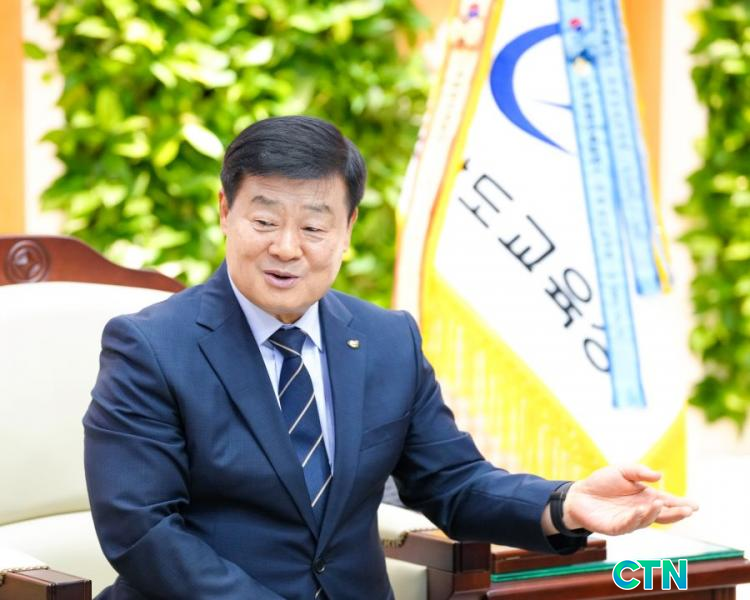 |
| 충남교육청 이병도 교육감/사진=충남교육청 제공 |
[인터뷰 ]
Q1. 선거기간 강조한 “도민 교육주권 시대”의 의미는?
'현장이 답이다'라는 신념 아래 출마 선언 이후 15개 시군을 돌며 150여 차례의 정책협약과 간담회를 통해 도민들의 제안을 경청하는 데 집중했습니다. 이러한 과정은 직접 도민들이 교육에 관한 의견을 제안할 수 있는 소통의 장으로 진행되었고, 도민이 직접 참여하여 제안하는 정책은 공약으로 반영되었습니다. 도민이 제안한 정책이 공약이 되는, 도민이 교육 정책 운용의 주체가 되는 시대가 바로 제가 제안한 '도민 교육주권 시대'입니다.
이는 단순히 표를 얻기 위한 공약이 아니었습니다. 실행력이 강한 교육감 당선인으로서, 제가 평생 지켜온 ‘교육 공동체 모두의 존엄’을 정책으로 증명하는 과정입니다. 앞으로 도민과 함께 소통하며 공약을 실행하는 모습을 통해, '도민 교육주권 시대'를 완성해 나갈 것입니다. 이를 위해 '타운홀미팅' 등 지속적인 경청과 소통의 자리를 마련하고자 합니다. 실행력 있는 교육감으로서 정책을 실천으로 증명하며, '충남 도민 교육주권 시대'를 힘차게 열어 나가겠습니다.
Q2. 교권 보호관 신설의 배경과 의미는?
교권 보호와 관련하여 가장 먼저 짚어보아야 할 것은 교권 보호가 교사의 권리만을 위한 것이 아닌, 안전한 교육환경 속에서 학생들의 학습권을 지키기 위한 선행 과제라는 점입니다. 저는 교육 현장에서 오랜 시간 함께하며 이 문제에 대해 끊임없이 고민해 왔고, 현장 지원방안으로 이미 교권보호관 제도를 구상하고 실현하기 위한 구체적인 계획을 설계하고 있었습니다.
현재 우리 교육 현장에서 교육활동 침해, 악성 민원, 아동학대 신고, 학부모 갈등 등 교권 사안이 발생했을 경우, 즉각적인 대응의 한계로 인해 교육활동이 위축되는 안타까움이 반복되고 있습니다. 교권보호관은 이러한 교육 현황을 정확히 진단해 현장 선생님들을 즉각 지원할 수 있게 계획하였으며, 교육활동의 주체인 교사가 안심하고 수업에 전념하도록 현장 맞춤형 해결책으로 추진 중입니다.
취임 후 1호로 '교권보호관 추진단'을 결재하여 교권보호관 신설에 따른 조직·인력·업무체계를 구체적으로 구성하고, 교육활동 보호 정책 및 피해 교원 지원 기능 강화 방안을 수립하였으며, 9월1일자로 정식 출범하였습니다. 교권보호관은 전체를 총괄하며, 법률·조사·조정·상담·현장 대응 기능을 갖춘 전문 인력을 배치해 전문적 지원을 강화합니다. 또한 교육활동 침해 사안에 신속한 초기 대응부터 회복 지원까지 원스톱으로 처리하는 통합지원 체계를 구축해 추진하고자 합니다. 충남교육청의 교권보호관은 현장 교사를 가장 먼저, 가장 가까이에서 지원하며 ‘교육활동’이 존중되는 학교 문화를 안착시키겠습니다.
Q3. 공약과 연계해 추진할 최대 역점 사업을 소개한다면.
안전한 교육활동 보호를 위한 '교권보호관'과 함께 공약과 연계해 추진할 최대 역점 사업으로는 '충남 학생 도서바우처' 사업이 있습니다. 충남의 모든 학생에게 연간 10만 원 상당의 도서 구입비를 '지역화폐' 형태로 매년 지원하는 정책으로, 아이들이 스스로 서점을 찾아 책을 고르고 가까이하는 습관을 길러줌으로써 문해력과 독서 기반 기초학력을 근본적으로 끌어올리는 근본적 교육 처방입니다.
저는 독서야말로 모든 학습의 출발점이자 미래 역량의 바탕이라고 생각합니다. 미래 사회를 주도하는 AI 시대에도 질문하는 힘, 읽고 판단하는 힘, 타인의 생각을 이해하는 힘은 결국 독서에서부터 시작됩니다. 문해력과 기초학력 신장이 급선무인 초등학교 저학년부터 시작해 지역화폐형 도서바우처를 지원해, 아이들이 자기 책을 고르고, 읽고, 토론하는 경험을 일상으로 만들고자 합니다.
도서바우처를 지역화폐와 연결하면 지역 서점, 더 나아가 지역경제에도 도움이 됩니다. 문해력 신장과 함께 위기에 처한 동네 서점에 활력을 불어넣어 ‘교육과 지역 경제가 함께 성장하는 선순환 구조’를 만들고, 충남을 전국 최고의 독서 교육 메카로 확실히 자리매김할 것입니다.
Q4. 과밀학급 해소와 농어촌 작은학교 육성 문제를 어떻게 풀어갈 생각인가?
충남은 도시의 인구 밀집과 농어촌의 학령 인구 급감이 맞물린 복합적인 교육격차 문제를 안고 있습니다. 저는 천안교육장을 지내며 이 문제를 가장 가까이에서 고민해 왔고, 지역 맞춤형 정책으로 '차이'를 '특색과 상생의 기회'로 전환하는 방안을 모색했습니다.
천안과 아산 지역의 '과밀학급'은 학교 신설에만 의존하지 않고, 다각적이고 신속하게 해결하는 방안을 도입하고자 검토하고 있습니다. 불당동과 청당동 등에 우선 통학버스 지원과 같은 긴급 처방, 인근 빌딩이나 유휴 시설을 유연하게 활용하는 캠퍼스형 분교와 같은 단기 정책, 학교 신설과 같은 중장기 정책으로 개발지구의 과밀학급과 원거리 통학 문제를 해결하기 위해 체계적으로 접근하고 있습니다.
또한, 농어촌 지역의 학생 수 감소와 교육과정 선택권 문제는 새로운 시각으로 접근합니다. 작은 학교를 없애는 방법이 아닌, 지역의 거점으로 살리는 방안으로 거점학교와 특화학교, 공유학교를 연결해 아이들이 다양한 수업과 체험을 함께 누리게 합니다. 학교 간 공동 교육과정, 방과 후 프로그램 연계 운영은 선택형 교육을 확대해 교육 경쟁력 강화에 큰 힘이 되어줍니다. 지역을 지키는 마지막 가장 소중한 공공 인프라로서의 학교, 충남교육이 먼저 앞장서서 그 가치를 지키겠습니다.
Q5. 기초학력 격차 우려에 대한 방안은?
현장에서 기초학력 향상이 실제로 작동하려면 먼저 아이가 왜 배우지 못하는지 정확히 봐야 합니다. 읽기 곤란인지, 정서·행동의 어려움인지, 가정환경인지, 이주배경 학생의 학습언어 문제인지 원인이 다양하기에 모두 같은 보충 학습만으로 해결되지 않습니다.
이를 위해 우선 복합적 원인을 진단하고, 각 원인에 맞는 맞춤형 지원이 필요합니다. 충남교육은 기초학력 학생 맞춤형 지원을 위해 온채움 시스템 기반 복합요인 진단과 처방을 강화하여 추진하고 있습니다. 온채움 시스템 고도화를 통해 저해 요인별 맞춤형 지원을 강화해 학생들의 학습의 힘을 길러낼 수 있도록 집중 지원하고자 합니다.
이와 함께 기초학력 전담교사, 학습지원 패스포트, 퇴직 교사와 대학생 멘토 튜터풀을 연결해 학년이 바뀌어도 연결된 지원으로 지속 성장을 지원하고자 합니다. 또한 방학 중에는 거점형 학업도약캠프를 운영해 사교육을 받는 아이와 그렇지 못한 아이의 교육 경험 차이가 발생하지 않도록 공교육이 앞장서겠습니다. 낙인찍는 정책이 아닌, 회복을 돕는 기초학력 정책으로 한 명 한 명의 아이도 배움에서 소외되지 않도록 지키겠습니다.
Q6. 인공지능(AI) 교육 현장 안착을 위한 지원책은?
AI 교육에서 가장 중요한 것은 많은 장비도 중요하지만, 어느 지역의 아이든 같은 수준의 미래 교육을 누리게 하는 것입니다. AI가 또 다른 사교육 격차가 되지 않도록, 도농 복합 지역인 충남의 특성에 맞게 15개 시군별 AI 교육 특화 미래 배움터를 조성하고자 합니다.
이미 구축된 AI센터를 토대로 학생 개인의 학습 상황을 안전하게 진단하고 지원하는 충남형 AI 학습지원 체계를 구축하고자 합니다. 이 배움터를 통해 학교 수업과 방과후, 진로 체험을 연결하여 미래 사회에 대응할 수 있는 역량 함양의 기회를 마련하는데 교육 역량을 집중할 계획입니다.
다만 기술이 교육의 주인이 되어서는 안 됩니다. AI시대 교육 혁신의 중심에는 교사가 있습니다. 교사가 교육과정을 설계하고, AI는 아이의 배움과 교사의 수업을 돕는 도구가 되어야 합니다. 지식을 전달하는 체계를 넘어 AI와 함께 살아갈 미래 세대의 역량을 키우는 방향으로 충남교육도 근본적인 전환을 이루겠습니다.
Q7. 고교학점제와 내신5등급제에 대한 교육감님의 의견은?
고교학점제는 학습에 대한 학생 주도성을 시스템 차원에서 끌어내고, 진로와 미래에 대해 진지한 고민을 할 수 있도록 마련된 교육 제도입니다. 다만, 평가 제도부터 다층적 차원의 준비가 현실적이지 못하여 현장의 어려움과 아쉬움이 있습니다. 충남교육은 온라인학교, 공동교육과정 등을 활발하게 운영해 소규모 학교 및 농어촌 지역의 과목 선택권을 보장하며 안착해 나가고 있습니다.
내신 5등급제는 고교학점제와 분리된 정책입니다. 원래 고교학점제 완전 도입에 발맞춰 성취평가제(절대평가)로 대체하려 했으나, 5등급제를 도입해 내신 경쟁 및 낙인효과 등 현장의 어려움을 야기하고 있습니다. 충남교육은 5등급제의 폐해를 보완하고 성취평가제 중심의 과정 중심 평가 체계 구축을 위해 교육 관계 기관과 지속 협력하겠습니다.
Q8. 교육재정을 효율적으로 운영하고 재정 건전성을 높이기 위한 방안은?
최근 세수 여건의 변화와 경제 불확실성으로 교육재정이 쉽지 않습니다. 그러나 충남교육은 ‘학생 중심의 효율적 재정 운용’을 과감하게 추진하고자 합니다. 유사·중복 사업은 과감히 조정하고 관행적·효과성 낮은 대형 사업을 점검해 불필요한 예산 증액을 억제하겠습니다.
하지만 예산 절감을 이유로 학생 안전, 기초학력 보장, 돌봄, 미래형 맞춤 교육 배움터 투자가 위축되어서는 안 됩니다. 절감된 재원은 교실 수업 지원과 교육 격차 해소, 교권 보호에 집중 투입하겠습니다. 주민참여예산제 확대와 집행 과정 공개로 도민과의 신뢰를 최고 수준으로 높이겠습니다.
Q9. 충남도와 도의회와의 소통·협력 방안은?
충남교육청과 충남도청, 충남도의회는 충남교육의 발전과 아이들의 미래를 위해 함께 책임을 다할 동반자입니다. '먼저 찾아가는 소통'과 '함께 공감하는 정책 실현'을 실천하겠습니다.
주요 정책 집행 전부터 도의회 교육위원회와 긴밀하게 소통하는 협력 체계를 강화하고, 현안 발생 시 실무진 간 소통 채널을 상시 가동하겠습니다. 진정성 있는 경청과 원칙 있는 협력을 통해 충남의 미래를 함께 열어가겠습니다.
Q10. 인터뷰를 마치며 도민들께 하시고 싶은 말씀이 있다면?
'교육은 제도가 아니라 한 아이의 삶을 바꾸는 일'이라는 교육 신념을 바탕으로, 아이 한 명 한 명의 삶과 가능성을 중심에 두는 '사람 중심의 따뜻한 학교'를 만들겠습니다.
기초학력은 회복되고, 선생님은 수업 연구에 집중하고, 아이들은 안전하게 성장하는 충남교육. "충남에서는 어느 곳에서 태어나고 자란 아이라도 차별 없이 자신의 꿈을 마음껏 펼칠 수 있게 되었다"라는 약속을 반드시 행동과 실천으로 지키겠습니다./대담: 한성진 편집국장 / 정리: 감정은 충남취재본부장
[영문 번역-ai]
[Interview] Lee Byung-do, Superintendent of Chungnam Office of Education: "An Era Where Citizens Own Education… Leading a Major Transformation of Field-Centered Chungnam Education"
[Subtitle 1]
Initiating Great Shifts in Teacher Rights, Basic Learning, and AI Future Education Under 'Citizens' Educational Sovereignty'
[Subtitle 2]
Presenting Complete Solutions for Chungnam Educational Issues: Creating Teacher Protection Officers, Student Book Vouchers, Overcrowded Classes, and Small Rural Schools
[Editor's Note - Expanded 1-Page Lead]
CTN, South Korea's leading internet news outlet, and the Chungnam Education Newspaper, a pioneer in advocating true education, met with Lee Byung-do, Superintendent of the Chungnam Office of Education. Superintendent Lee is making multifaceted efforts to set a new direction for Chungnam education and build a sustainable educational ecosystem amid a rapidly changing era.
Since taking office, Superintendent Lee has maintained close communication with residents, parents, and school staff by visiting all 15 cities and counties in Chungnam under the clear conviction that "the answer lies in the field." After listening to vivid voices from the ground through dozens of policy agreements and meetings, he declared the opening of the "Era of Citizens' Educational Sovereignty," where residents move beyond being simple consumers of policy to become actual leaders in educational operations. This declaration reflects his strong determination to honor the dignity of all members of the educational community and to prove his campaign promises through action.
Notably, as his first official act upon taking office, Superintendent Lee approved the creation of the 'Teacher Rights Protection Officer.' This initiative established a comprehensive one-stop support system that allows teachers to focus on their educational activities with peace of mind. This field-customized policy stems from his firm belief that protecting teacher rights is a prerequisite for safeguarding students' right to learn in a safe environment. Furthermore, through the 'Chungnam Student Book Voucher' program, which provides all students in Chungnam with 100,000 KRW annually in local currency to purchase books, he is constructing a nation-leading reading education model that creates a virtuous cycle between boosting literacy and revitalizing local bookstores.
In addition, Superintendent Lee presents clear and concrete solutions to pressing issues in Chungnam education: multi-layered approaches to alleviate overcrowded classrooms in urban areas (Cheonan and Asan); operating shared schools and joint curricula to preserve small rural schools as regional hubs; establishing 'AI Education Specialized Future Learning Centers' across all 15 cities and counties to bridge digital divides; and advancing the 'On-Chaeum System' to restore basic academic achievement so that no single child is left behind.
In this interview, conducted by Editor-in-Chief Han Sung-jin and summarized by Gam Jeong-eun, Head of the Chungnam Bureau, we take an in-depth look at Superintendent Lee Byung-do's educational philosophy, core policy directions, and execution plans to design a bright future for Chungnam education and create "schools of coexistence and responsibility where every child in Chungnam can pursue their dreams without discrimination."
[Interview Content]
1. What is the meaning of the "Era of Citizens' Educational Sovereignty" emphasized during the election?
Based on the belief that "the answer lies in the field," I focused on listening to residents' proposals through around 150 policy agreements and meetings across 15 cities and counties after announcing my candidacy. This process served as a forum for communication where citizens could directly propose their ideas, and those proposals were reflected in my campaign promises. The era in which policies proposed by citizens become campaign promises and where residents become the main subjects of educational policy management is precisely the "Era of Citizens' Educational Sovereignty."
This was not merely a promise to win votes. As a superintendent with strong execution power, it is a process of proving through policy "the dignity of all members of the educational community," a principle I have held throughout my life. Moving forward, I will complete this era by continuously communicating with residents and fulfilling promises. To this end, I intend to provide continuous opportunities for listening and dialogue through town hall meetings. As an executive superintendent, I will prove policy through action and vigorously open the "Era of Chungnam Citizens' Educational Sovereignty."
2. What is the background and significance of establishing the Teacher Rights Protection Officer?
The first point to address regarding teacher rights protection is that it is not solely for the rights of teachers, but a prerequisite for protecting students' right to learn within a safe environment. Having spent a long time in the educational field, I have continuously pondered this issue and had already designed a concrete plan to realize the Teacher Rights Protection Officer system as a field-support measure.
Currently, when educational activity infringements, malicious complaints, child abuse reports, or parent disputes occur in schools, educational activities are repeatedly discouraged due to the limitations of immediate response. The Teacher Rights Protection Officer was planned to accurately diagnose these situations and provide immediate assistance, serving as a customized solution so teachers can focus on teaching with peace of mind.
As my first official approval upon taking office, I signed off on the 'Teacher Rights Protection Task Force' to structure the organization, personnel, and operational framework, strengthening policies to protect educational activities and support victimized teachers. It officially launched on September 1. The Teacher Rights Protection Officer oversees the overall operations, deploying specialized personnel equipped with legal, investigative, mediation, counseling, and field-response capabilities. We aim to establish a one-stop integrated support system from swift initial response to recovery. The Chungnam Office of Education's Teacher Rights Protection Officer will support teachers first and closest to the field, anchoring a school culture where educational activities are respected.
3. What is the main flagship project to be implemented in connection with your promises?
Along with the 'Teacher Rights Protection Officer' for safe educational activities, the flagship project to be pursued is the 'Chungnam Student Book Voucher' program. This policy annually provides approximately 100,000 KRW worth of book purchase funds in the form of local currency to every student in Chungnam. It serves as a fundamental educational prescription that raises literacy and basic academic skills based on reading by instilling the habit of visiting local bookstores and choosing books.
I believe reading is the starting point of all learning and the foundation for future competencies. Even in the AI era, the power to question, read and judge, and understand others' thoughts originates from reading. Starting with lower primary grades, where literacy and basic academic growth are urgent, we aim to make choosing, reading, and discussing books an everyday experience through local currency book vouchers.
Connecting book vouchers with local currency benefits local bookstores and the local economy. It injects vitality into struggling neighborhood bookstores while boosting literacy, creating a 'virtuous cycle where education and the local economy grow together,' firmly establishing Chungnam as the nation's top hub for reading education.
4. How do you plan to resolve overcrowded classes and nurture small rural schools?
Chungnam faces complex educational gap issues resulting from urban population density combined with a sharp decline in the school-age population in rural areas. Having served as the Superintendent of Cheonan Education Support Office, I pondered this issue up close and sought ways to turn 'differences' into 'opportunities for specialization and coexistence' through tailored regional policies.
To address overcrowded classes in Cheonan and Asan, we are reviewing swift and multi-faceted solutions rather than relying solely on building new schools. We are systematically approaching the issue through emergency measures like supporting school buses in areas such as Buldang-dong and Cheongdang-dong, short-term policies like campus-style branch schools utilizing nearby buildings or vacant facilities, and mid-to-long-term policies like constructing new schools.
Furthermore, we approach the decline in rural student numbers and course choice rights from a new perspective. Instead of closing small schools, we connect them as hub schools, specialized schools, and shared schools to revitalize them as regional bases, allowing students to enjoy diverse classes and experiences together. Joint curricula between schools and linked after-school programs expand elective education and strengthen educational competitiveness. As schools are the last and most precious public infrastructure protecting local communities, the Chungnam Office of Education will take the lead in safeguarding their value.
5. What are the plans to address concerns regarding the basic academic achievement gap?
For basic academic improvement to work in practice, we must first accurately diagnose why a child experiences learning difficulties. Causes vary—ranging from reading difficulties, emotional and behavioral challenges, home environments, to learning language barriers for multicultural students—so uniform supplementary lessons cannot solve the problem.
Therefore, we must diagnose complex causes and provide tailored support matching each cause. Chungnam Education is strengthening diagnosis and prescriptions based on the 'On-Chaeum System' to support students needing basic academic help. By upgrading the On-Chaeum System, we aim to enhance customized support according to risk factors and foster students' learning power.
Additionally, by connecting dedicated basic education teachers, learning support passports, and a tutor pool of retired teachers and university students, we will provide continuous support even as students advance grades. During vacations, we will operate hub-style academic jump-up camps to ensure public education bridges the gap in educational experiences between students receiving private tutoring and those who do not. Through policies that heal rather than label, we will protect every single child so they are not marginalized from learning.
6. What support measures exist for settling Artificial Intelligence (AI) education in schools?
The most critical aspect of AI education is ensuring that children in all regions enjoy the same level of future education, beyond just acquiring equipment. To prevent AI from becoming another private education gap, we plan to establish 'AI Education Specialized Future Learning Centers' in all 15 cities and counties tailored to Chungnam's urban-rural characteristics.
Based on existing AI centers, we aim to build a Chungnam-style AI learning support system that safely diagnoses and supports individual student learning progress. Through these learning centers, we plan to concentrate educational capabilities on connecting regular classes, after-school programs, and career experiences to cultivate competencies for future society.
However, technology must not master education. Teachers stand at the heart of educational innovation in the AI era. Teachers must design the curriculum, while AI serves as a tool to assist student learning and teacher instruction. Chungnam Education will undergo a fundamental transition toward developing competencies for future generations to live alongside AI, moving beyond simple knowledge delivery.
7. What is your opinion on the High School Credit System and the 5-Grade Relative Evaluation System?
The High School Credit System is designed to draw out student initiative at a systemic level and encourage serious exploration of future careers. However, there are field difficulties and shortcomings due to unrealistic preparations regarding the evaluation system. Chungnam Education is stabilizing the system by actively operating online schools and joint curricula to guarantee course choice rights for students in small and rural schools.
The 5-Grade System is separate from the High School Credit System. Originally, absolute evaluation (criterion-referenced evaluation) was supposed to replace relative evaluation alongside the full implementation of the High School Credit System, but introducing the 5-Grade System has exacerbated field difficulties, such as intense grade competition and labeling effects. Chungnam Education will continuously cooperate with educational authorities to mitigate the drawbacks of the 5-Grade System and establish a process-focused evaluation system centered on criterion-referenced evaluation.
8. How will you efficiently manage educational finances and enhance fiscal soundness?
Due to recent changes in tax revenues and economic uncertainties, educational finances face tough conditions. However, Chungnam Education will boldly pursue 'student-centered efficient fiscal management.' We will adjust duplicate or similar projects and inspect routine, low-efficacy large-scale projects to curb unnecessary budget increases.
Nevertheless, budget reductions must not shrink investments in student safety, basic learning guarantees, childcare, or future-oriented learning spaces. Saved funds will be concentrated on classroom instruction support, bridging educational gaps, protecting teacher rights, and creating safe schools. By expanding participatory budgeting and transparently disclosing execution processes, we will maximize public trust.
9. How do you plan to communicate and cooperate with the Chungnam Provincial Government and Provincial Council?
The Chungnam Office of Education, Chungnam Provincial Government, and Chungnam Provincial Council are partners sharing responsibility for the development of Chungnam education and the future of our children. We will practice 'proactive communication' and 'realizing policies through shared empathy.'
We will strengthen a cooperative structure by communicating closely with the Education Committee of the Provincial Council before executing major policies, and operate working-level communication channels at all times to share issues swiftly. Through genuine listening and principled cooperation, we will open the future of Chungnam together.
10. Any closing words for the residents of Chungnam?
Based on the conviction that "education is not about systems, but about changing a child's life," I will build 'person-centered warm schools' that place each child's life and potential at the center.
We will create an educational environment where basic academic skills are restored, teachers focus on lesson research, and students grow safely. I will fulfill my promise through action and practice so that "any child born and raised in Chungnam can fully pursue their dreams without discrimination."
[Interviewer: Han Sung-jin, Editor-in-Chief / Reporter: Gam Jeong-eun, Head of Chungnam Bureau]
 |
한성진 기자 handumok@hanmail.net
한성진 기자 입니다. |
#충남교육신문 #이병도 #이병도교육감 #충남교육청 #충남교육 #한성진기자 #감정은기자 #도민교육주권 #교권보호관 #충남학생도서바우처 #과밀학급해소 #작은학교살리기 #온채움시스템 #기초학력 #AI미래교육 #고교학점제 #충남도의회 #교육인터뷰 #CTN #ChungnamEducationNewspaper #LeeByungDo #ChungnamOfficeOfEducation #HanSungJinReporter #GamJeongEunReporter #EducationalSovereignty #TeacherRightsProtection #StudentBookVoucher #OvercrowdedClassrooms #SmallRuralSchools #OnChaeumSystem #BasicAcademicSkills #AIEducation #HighSchoolCreditSystem #ChungnamProvincialCouncil #EducationInterview