익산시, 끈질긴 10년 생태 혁신 통했다
-익산시, 민선 6~8기 동안 '도시를 숲으로, 일상을 정원으로' 슬로건 아래 도심 전역 녹지 인프라 구축
-2019~2024년 '500만 그루 나무 심기' 목표 초과 달성(510만 주)… 기후대응 도시숲 등 26개소 조성
-2019~2024년 '500만 그루 나무 심기' 목표 초과 달성(510만 주)… 기후대응 도시숲 등 26개소 조성
최동주 인턴기자입력 : 2026. 06. 12(금) 08:35


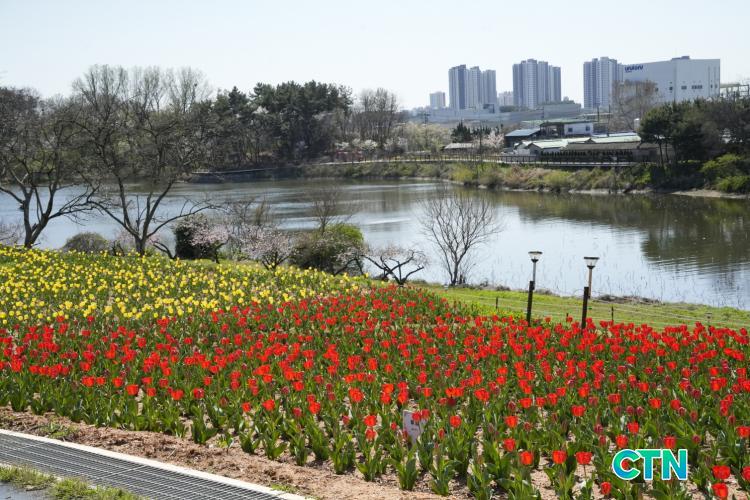
사진=익산시청 제공
[익산/CTN]최동주 기자= 김형훈 익산시 녹색도시환경국장은 "지난 10년간 시민들과 함께 땀 흘려 나무를 심고 정원을 가꾼 결과, 익산은 이제 전국 최고 수준의 친환경 생태 강소도시로 자리잡았다"라며 "그동안 다져온 독보적인 정원 인프라를 바탕으로 시민 누구나 집 문을 열면 숲과 정원을 만날 수 있는 품격 있는 녹색 안심 도시를 완성하는 데 최선을 다하겠다"라고 말했다. 익산시가 민선 6기부터 8기까지 10여 년간 추진해 온 생태 혁신 사업을 통해 도심 환경을 친환경 정원 도시로 탈바꿈하는 데 성공했다고 발표했다. 김 국장은 10일 정례 브리핑을 열고, 그간 시민들과 함께 일궈낸 생활권 녹색 인프라 구축 성과와 함께 미래 정원 도시로의 도약 청사진을 제시했다.
익산시 생태 전환의 핵심 축은 기후 위기 대응을 위해 추진된 '500만 그루 나무 심기 사업'이다. 시는 2019년부터 2024년까지 공공과 민간의 협력을 통해 총 510만 3,731주의 나무를 식재하며 당초 목표를 초과 달성했다. 이를 바탕으로 2018년부터 현재까지 축구장 약 33개 규모에 달하는 26개소(23만 4,000㎡)의 도시숲이 도심 한가운데 조성됐다. 특히 산업단지와 폐철도 유휴 부지를 활용한 오송누리숲길 등 기후대응 도시숲은 미세먼지를 차단하는 허파 역할을 하고 있으며, 최근 야간 안전 조명 확충을 통해 시민들의 안식처로 진화했다. 이외에도 대간선수로변 3.5㎞ 구간의 명품 가로수길, 왕궁 국가식품클러스터 대로변 청단풍 거리, 남창초·모현초 등 8개소에 조성된 '자녀안심 그린숲' 등이 차례로 정비됐다.
시는 도심을 넘어 익산 전역으로 정원 문화를 확산시키고 있다. 현재 북부권 생태 관광의 거점이 될 '용안생태습지 지방정원 조성사업'에 행정력을 집중하고 있다. 총사업비 64억 원을 투입해 금강 수변의 천혜 경관과 백제 문화를 융합한 8개 주제 정원을 2026년까지 완공할 예정이다. 또한, 지난 2021년 전북 제4호 민간정원으로 등록된 황등면 '아가페정원'은 메타세쿼이아 숲길을 중심으로 지난해에만 36만 명의 관광객을 유치하며 지역 대표 명소로 자리 잡았다. 상수원 보호를 위해 50년간 폐쇄됐던 '신흥공원' 역시 3.8㏊ 부지에 24만 주의 꽃과 나무를 심어 무지개정원, 수국정원, 핑크뮬리원 등으로 재탄생했다. 특히 지난해 10월에는 중앙체육공원과 신흥공원을 잇는 '친환경 보행교'를 개통해 보행 안전성을 높였다. 실효 위기에 처했던 장기미집행 도시공원을 보존하기 위해 도입한 '민간공원 특례사업'도 성공적으로 안착해 마동, 수도산, 모인, 소라공원 등 4대 도심 공원을 기부채납 받아 예산을 절감하는 효과를 거두었다.
도시 고유의 자산과 민간 자본을 적절히 활용해 장기 미집행 공원의 난개발을 막고, 숲을 매개로 시민들의 정주 여건을 대폭 개선한 익산시의 행보는 로컬리즘(지방 특색주의) 시대의 성공적인 지자체 벤치마킹 사례로 평가받을 만하다. 산업단지와 폐철도라는 도시의 약점을 생태 인프라로 역이용하고, 민간공원 특례사업을 통해 예산 효율성을 극대화한 점은 행정의 유연성과 지속 가능성을 동시에 확보한 대목이다.
다만, 수백만 그루에 달하는 식재 수목과 도심 곳곳에 분산된 유휴지 정원들이 초기 조성 단계를 지나 본격적인 유지·관리 주기에 접어든 만큼, 향후 고사율 관리와 체계적인 전정 작업 등 사후 관리에 투입될 행정 비용 부담에 대한 정밀한 대비책이 요구된다. 대규모 나무 심기와 공원 조성은 화려한 치적이 되기 쉽지만, 기후 변화에 따른 가뭄이나 병충해로 수목이 집단 고사할 경우 예산 낭비 논란으로 직결될 수 있기 때문이다. 익산시가 이러한 대규모 녹지 인프라를 안정적으로 유지하기 위해 시민 관리단을 상설화하고 전문적인 수목 방제 시스템을 구축하는 등 질적 관리에 방점을 둔 내실 있는 사후 행정을 이어가야만, 진정한 의미의 지속 가능한 녹색 안심 도시로 거듭날 수 있을 것이다.
[영문번역 기사-AI활용]
Kim Hyung-hoon, Director of the Green City Environment Bureau of Iksan City, stated, "As a result of sweating alongside citizens to plant trees and cultivate gardens over the past 10 years, Iksan has now established itself as a top-tier eco-friendly eco-powerhouse city in the nation. Based on the unparalleled garden infrastructure built so far, we will do our utmost to complete a prestigious and safe green city where anyone can encounter forests and gardens right outside their doorstep." Iksan City announced that it has successfully transformed its urban environment into an eco-friendly garden city through ecological innovation projects pursued over the past decade from the 6th to the 8th popular elections. Director Kim held a regular briefing on June 10 to present the achievements of establishing a green infrastructure in living zones, which was accomplished together with citizens over the past 10 years, along with a blueprint for leaping into a future garden city.
The core pillar of Iksan's ecological transition is the '500 Million Trees Planting Project' promoted to respond to the climate crisis. The city exceeded its initial target by planting a total of 5,103,731 trees through public-private cooperation from 2019 to 2024. Based on this, 26 urban forests spanning 234,000 square meters—equivalent to the size of about 33 soccer fields—have been created in the center of the city since 2018. In particular, climate-response urban forests utilizing industrial complexes and abandoned railroad idle sites, such as the Osong Nuri Forest Trail, serve as lungs that block fine dust, and have recently evolved into havens for citizens with enhanced night safety lighting. Other developments include a 3.5-kilometer premium street tree section from Pyeonghwa Overpass to Mokcheon Church, a Cheondanpung (green maple) street along the main road of the Wanggung National Food Cluster, and 'Child-Safe Green Forests' created at eight locations including Namchang and Moheyon Elementary Schools.
The city is expanding its garden culture beyond downtown to the entire area of Iksan. Currently, administrative power is concentrated on the 'Yongan Ecological Wetland Local Garden Creation Project,' which will become a hub for ecological tourism in the northern area. Investing a total project cost of 6.4 billion won, eight themed gardens blending the natural scenery of the Geumgang riverfront with Baekje culture are scheduled to be completed by 2026. In addition, 'Agape Garden' in Hwangdeung-myeon, which unveiled itself after being registered as Jeonbuk's No. 4 Private Garden in 2021, attracted 36,000 tourists last year alone based on its scenic Metasequoia forest trail, standing tall as a representative garden of the region. 'Shinheung Park,' which had been closed for 50 years to protect the water supply source, has also been reborn by planting 240,000 flowers and trees on a 3.8-hectare site, featuring a Rainbow Garden, Hydrangea Garden, and Pink Muhly Garden. Notably, in October last year, an 'Eco-friendly Pedestrian Bridge' connecting Jungang Sports Park and Shinheung Park was opened to improve pedestrian safety. The 'Private Park Special Project,' introduced to preserve long-term unexecuted urban parks that were at risk of expiration, also settled successfully, generating budget-saving effects by receiving donations of four major downtown parks, including Madong, Sudosan, Moin, and Sora Parks.
Iksan City's approach of appropriately utilizing its unique urban assets and private capital to prevent the reckless development of long-term unexecuted parks, and significantly improving the residential conditions of citizens through forests, is worthy of evaluation as a successful benchmarking case for local governments in the era of regionalism. Reversing the city's weaknesses, such as industrial complexes and abandoned railroads, into ecological infrastructures, and maximizing budget efficiency through private park special projects, secured both administrative flexibility and sustainability.
However, since millions of planted trees and gardens scattered throughout urban idle lands have passed the initial formation stage and entered a full-scale maintenance cycle, a precise countermeasure against the administrative cost burden to be injected into follow-up management, such as mortality rate control and systematic pruning work, is required in the future. Large-scale tree planting and park creation can easily become flashy achievements, but if trees die en masse due to droughts or pest infestations caused by climate change, it can lead directly to controversy over budget waste. Only when Iksan City continues substantial follow-up administration focusing on qualitative management—such as regularizing a citizen management team and establishing a professional tree pest control system to stably maintain these large-scale green infrastructures—will it be able to reborn as an authentic, sustainable, and safe green city.
익산시 생태 전환의 핵심 축은 기후 위기 대응을 위해 추진된 '500만 그루 나무 심기 사업'이다. 시는 2019년부터 2024년까지 공공과 민간의 협력을 통해 총 510만 3,731주의 나무를 식재하며 당초 목표를 초과 달성했다. 이를 바탕으로 2018년부터 현재까지 축구장 약 33개 규모에 달하는 26개소(23만 4,000㎡)의 도시숲이 도심 한가운데 조성됐다. 특히 산업단지와 폐철도 유휴 부지를 활용한 오송누리숲길 등 기후대응 도시숲은 미세먼지를 차단하는 허파 역할을 하고 있으며, 최근 야간 안전 조명 확충을 통해 시민들의 안식처로 진화했다. 이외에도 대간선수로변 3.5㎞ 구간의 명품 가로수길, 왕궁 국가식품클러스터 대로변 청단풍 거리, 남창초·모현초 등 8개소에 조성된 '자녀안심 그린숲' 등이 차례로 정비됐다.
시는 도심을 넘어 익산 전역으로 정원 문화를 확산시키고 있다. 현재 북부권 생태 관광의 거점이 될 '용안생태습지 지방정원 조성사업'에 행정력을 집중하고 있다. 총사업비 64억 원을 투입해 금강 수변의 천혜 경관과 백제 문화를 융합한 8개 주제 정원을 2026년까지 완공할 예정이다. 또한, 지난 2021년 전북 제4호 민간정원으로 등록된 황등면 '아가페정원'은 메타세쿼이아 숲길을 중심으로 지난해에만 36만 명의 관광객을 유치하며 지역 대표 명소로 자리 잡았다. 상수원 보호를 위해 50년간 폐쇄됐던 '신흥공원' 역시 3.8㏊ 부지에 24만 주의 꽃과 나무를 심어 무지개정원, 수국정원, 핑크뮬리원 등으로 재탄생했다. 특히 지난해 10월에는 중앙체육공원과 신흥공원을 잇는 '친환경 보행교'를 개통해 보행 안전성을 높였다. 실효 위기에 처했던 장기미집행 도시공원을 보존하기 위해 도입한 '민간공원 특례사업'도 성공적으로 안착해 마동, 수도산, 모인, 소라공원 등 4대 도심 공원을 기부채납 받아 예산을 절감하는 효과를 거두었다.
도시 고유의 자산과 민간 자본을 적절히 활용해 장기 미집행 공원의 난개발을 막고, 숲을 매개로 시민들의 정주 여건을 대폭 개선한 익산시의 행보는 로컬리즘(지방 특색주의) 시대의 성공적인 지자체 벤치마킹 사례로 평가받을 만하다. 산업단지와 폐철도라는 도시의 약점을 생태 인프라로 역이용하고, 민간공원 특례사업을 통해 예산 효율성을 극대화한 점은 행정의 유연성과 지속 가능성을 동시에 확보한 대목이다.
다만, 수백만 그루에 달하는 식재 수목과 도심 곳곳에 분산된 유휴지 정원들이 초기 조성 단계를 지나 본격적인 유지·관리 주기에 접어든 만큼, 향후 고사율 관리와 체계적인 전정 작업 등 사후 관리에 투입될 행정 비용 부담에 대한 정밀한 대비책이 요구된다. 대규모 나무 심기와 공원 조성은 화려한 치적이 되기 쉽지만, 기후 변화에 따른 가뭄이나 병충해로 수목이 집단 고사할 경우 예산 낭비 논란으로 직결될 수 있기 때문이다. 익산시가 이러한 대규모 녹지 인프라를 안정적으로 유지하기 위해 시민 관리단을 상설화하고 전문적인 수목 방제 시스템을 구축하는 등 질적 관리에 방점을 둔 내실 있는 사후 행정을 이어가야만, 진정한 의미의 지속 가능한 녹색 안심 도시로 거듭날 수 있을 것이다.
[영문번역 기사-AI활용]
Kim Hyung-hoon, Director of the Green City Environment Bureau of Iksan City, stated, "As a result of sweating alongside citizens to plant trees and cultivate gardens over the past 10 years, Iksan has now established itself as a top-tier eco-friendly eco-powerhouse city in the nation. Based on the unparalleled garden infrastructure built so far, we will do our utmost to complete a prestigious and safe green city where anyone can encounter forests and gardens right outside their doorstep." Iksan City announced that it has successfully transformed its urban environment into an eco-friendly garden city through ecological innovation projects pursued over the past decade from the 6th to the 8th popular elections. Director Kim held a regular briefing on June 10 to present the achievements of establishing a green infrastructure in living zones, which was accomplished together with citizens over the past 10 years, along with a blueprint for leaping into a future garden city.
The core pillar of Iksan's ecological transition is the '500 Million Trees Planting Project' promoted to respond to the climate crisis. The city exceeded its initial target by planting a total of 5,103,731 trees through public-private cooperation from 2019 to 2024. Based on this, 26 urban forests spanning 234,000 square meters—equivalent to the size of about 33 soccer fields—have been created in the center of the city since 2018. In particular, climate-response urban forests utilizing industrial complexes and abandoned railroad idle sites, such as the Osong Nuri Forest Trail, serve as lungs that block fine dust, and have recently evolved into havens for citizens with enhanced night safety lighting. Other developments include a 3.5-kilometer premium street tree section from Pyeonghwa Overpass to Mokcheon Church, a Cheondanpung (green maple) street along the main road of the Wanggung National Food Cluster, and 'Child-Safe Green Forests' created at eight locations including Namchang and Moheyon Elementary Schools.
The city is expanding its garden culture beyond downtown to the entire area of Iksan. Currently, administrative power is concentrated on the 'Yongan Ecological Wetland Local Garden Creation Project,' which will become a hub for ecological tourism in the northern area. Investing a total project cost of 6.4 billion won, eight themed gardens blending the natural scenery of the Geumgang riverfront with Baekje culture are scheduled to be completed by 2026. In addition, 'Agape Garden' in Hwangdeung-myeon, which unveiled itself after being registered as Jeonbuk's No. 4 Private Garden in 2021, attracted 36,000 tourists last year alone based on its scenic Metasequoia forest trail, standing tall as a representative garden of the region. 'Shinheung Park,' which had been closed for 50 years to protect the water supply source, has also been reborn by planting 240,000 flowers and trees on a 3.8-hectare site, featuring a Rainbow Garden, Hydrangea Garden, and Pink Muhly Garden. Notably, in October last year, an 'Eco-friendly Pedestrian Bridge' connecting Jungang Sports Park and Shinheung Park was opened to improve pedestrian safety. The 'Private Park Special Project,' introduced to preserve long-term unexecuted urban parks that were at risk of expiration, also settled successfully, generating budget-saving effects by receiving donations of four major downtown parks, including Madong, Sudosan, Moin, and Sora Parks.
Iksan City's approach of appropriately utilizing its unique urban assets and private capital to prevent the reckless development of long-term unexecuted parks, and significantly improving the residential conditions of citizens through forests, is worthy of evaluation as a successful benchmarking case for local governments in the era of regionalism. Reversing the city's weaknesses, such as industrial complexes and abandoned railroads, into ecological infrastructures, and maximizing budget efficiency through private park special projects, secured both administrative flexibility and sustainability.
However, since millions of planted trees and gardens scattered throughout urban idle lands have passed the initial formation stage and entered a full-scale maintenance cycle, a precise countermeasure against the administrative cost burden to be injected into follow-up management, such as mortality rate control and systematic pruning work, is required in the future. Large-scale tree planting and park creation can easily become flashy achievements, but if trees die en masse due to droughts or pest infestations caused by climate change, it can lead directly to controversy over budget waste. Only when Iksan City continues substantial follow-up administration focusing on qualitative management—such as regularizing a citizen management team and establishing a professional tree pest control system to stably maintain these large-scale green infrastructures—will it be able to reborn as an authentic, sustainable, and safe green city.
 |
최동주 인턴기자 dongjoo3333@naver.com
|