농식품부, 이번엔 도시 청년여성? '시골언니 프로젝트' 가동
-농식품부, 6월부터 11월까지 청년여성 대상 농업·농촌 탐색교육 프로그램 본격 실시
-원주·남원·상주·청도·거창 등 5개 기관 선정, 맞춤형 3대 분야(귀농·창업·정착) 개편
-원주·남원·상주·청도·거창 등 5개 기관 선정, 맞춤형 3대 분야(귀농·창업·정착) 개편
가요진 기자입력 : 2026. 05. 28(목) 12:14


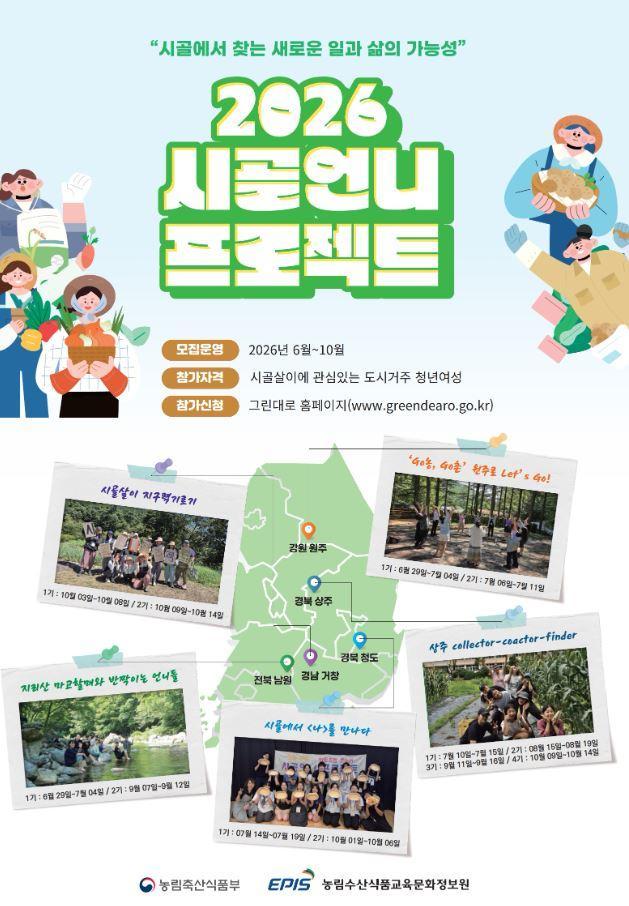
포스터=농림축산식품부 제공
[농식품부/CTN]가요진 기자= 농식품부 윤원습 농업정책관은 "고령화와 인구감소가 심화되는 농촌 현실에서 도시 청년여성의 농촌유입은 중요한 과제"라며, "시골언니 프로젝트를 통해 농촌에서의 일자리 체험 및 농촌살이 기회를 제공함으로써 교육생들이 농업·농촌 분야로 진로를 선택하고, 귀농귀촌지원 사업 등 후속 프로그램과의 연계를 통해 성공적으로 농촌에 정착할 수 있도록 적극적으로 지원해 나가겠다"고 밝혔다. 이번에 시행되는 '2026년 청년여성 농업·농촌 분야 탐색교육(이하 시골언니 프로젝트)'은 농촌지역에 먼저 정착한 선배 여성 멘토들과 함께 생생한 농촌살이를 탐색하는 현장 체험형 교육사업으로, 인구 소멸 위기에 직면한 농촌에 지속 가능한 활력을 불어넣기 위한 정부의 핵심 민생 정책이다.
지난해 추진된 시골언니 프로젝트는 지역 혁신센터 및 활력센터 취업, 지역 농산물을 활용한 로컬브랜드 창업 등 총 13명의 참여자가 실제 지역에 정착하거나 농산업 분야로 유입되는 실질적인 성과를 거두었다. 이러한 성과는 단순한 단기 체험을 넘어 청년여성들이 농촌에서 새로운 삶의 가능성을 발견하도록 돕는 정성적·정량적 마중물 역할을 톡톡히 해냈음을 보여준다. 올해는 이러한 성과를 바탕으로 강원 원주, 전북 남원, 경북 상주, 경북 청도, 경남 거창 등 전국 5개 현장운영기관을 엄선하여 오는 6월 29일 원주와 남원을 시작으로 대장정의 막을 올린다.
특히 올해 프로그램에서 가장 주목할 만한 변화는 교육 신청자들의 니즈에 맞춘 '유형별 맞춤형 설계'다. 현장운영기관의 특성에 따라 귀농 준비형, 창업 준비형, 지역정착 준비형으로 프로그램을 세분화하여 교육생들이 본인의 관심 방향에 맞춰 선택할 수 있도록 했다. 기존의 일률적인 농촌 체험에서 벗어나 진입 장벽을 대폭 낮추고 교육 집중도를 높인 이 방식은, 청년여성들이 농촌 진입 초기에 겪는 시행착오를 줄여주는 매우 실효성 있는 대안이 될 것으로 기대된다. 상세한 신청 방법은 귀농귀촌 종합 플랫폼인 '그린대로' 누리집을 통해 안내된다.
아울러 농식품부는 기관별·기수별로 파편화되기 쉬운 교육생들과 각 지역의 멘토들을 한자리에 모으는 '통합 홈커밍데이' 행사를 새롭게 개최할 계획이다. 이는 단순한 교육 종료로 관계가 단절되는 것을 막고, 청년여성들이 농촌 정착 과정에서 가장 필요로 하는 '사회적 연대감'과 '전국적인 네트워크'를 형성해 주기 위한 고도화된 전략이다. 멘토와 멘티 간의 지속적인 교류는 청년들이 농촌 외로움을 극복하고 안정적으로 정착하는 데 있어 강력한 지지 기반이 될 것이다.
결과적으로 이번 시골언니 프로젝트는 인구 고령화라는 농촌의 고질적인 문제를 청년여성의 감각과 지역 정착 멘토링이라는 소프트웨어적 접근으로 해결하려는 의미 있는 시도다. 이 사업이 일시적인 인구 유입 효과에 그치지 않으려면, 교육 이후에도 실제 정착 단계에서 지자체별 주거 지원, 초기 창업 자금 융자 등 행정·재정적 후속 프로그램과의 유기적인 연계 체계가 더욱 촘촘하게 뒷받침되어야 할 과제를 안고 있다.
[영문번역 기사-AI활용]
Yoon Won-seub, Director General of the Agricultural Policy Bureau of the Ministry of Agriculture, Food and Rural Affairs, said, "In the rural reality where aging and population decline are intensifying, the influx of urban youth women into rural areas is an important task," adding, "By providing jobs and rural living experiences through the 'Sisol Sister Project', we will actively support trainees to choose their career paths in the agricultural and rural sectors and successfully settle in rural areas through linkages with subsequent programs such as return-to-rural support projects." The '2026 Youth Women's Agricultural and Rural Field Exploration Education (hereinafter referred to as the 'Sisol Sister Project')' is a field experiential education project that explores and experiences various rural living methods with female mentors (Sisol Sisters) who settled first in rural areas. It is a core public welfare policy of the government to blow sustainable vitality into rural areas facing the crisis of regional extinction.
The 'Sisol Sister Project' pushed last year achieved practical results, with a total of 13 participants settling in the region or flowing into the agricultural industry sector, such as finding employment in regional innovation centers and vitality centers, or starting local brands using local agricultural products. These achievements show that it has played a role as a qualitative and quantitative priming water to help young women discover new life possibilities in rural areas beyond simple short-term experiences. Based on these achievements this year, five field operation organizations nationwide, including Wonju in Gangwon, Namwon in Jeonbuk, Sangju in Gyeongbuk, Cheongdo in Gyeongbuk, and Geochang in Gyeongnam, were carefully selected, and the grand journey will begin on June 29, starting with programs in Wonju and Namwon.
In particular, the most notable change in this year's program is the 'customized design by type' tailored to the needs of educational applicants. Depending on the characteristics of the field operation organizations, the programs are subdivided into return-to-farm preparation type, start-up preparation type, and regional settlement preparation type so that trainees can choose according to their interests. Breaking away from the existing uniform rural experience, this method, which significantly lowered barriers to entry and increased concentration on education, is expected to be a highly effective alternative to reduce trial and error that young women experience in the early stages of entering rural areas. Detailed application methods are guided through the 'Greendaero' website, a comprehensive return-to-farm platform.
In addition, the Ministry of Agriculture, Food and Rural Affairs plans to hold a new 'Integrated Homecoming Day' event where trainees, who are likely to be fragmented by organization and cohort, and mentors from each region can all gather. This is an advanced strategy to prevent relationships from being disconnected by simple termination of education and to form a 'social solidarity' and 'nationwide network' that young women need most in the process of settling down in rural areas. The continuous exchange between mentors and mentees will serve as a strong support base for young people to overcome rural loneliness and settle down stably.
Consequently, this 'Sisol Sister Project' is a meaningful attempt to solve the chronic problem of rural population aging through the sensibilities of young women and software-based approaches of regional settlement mentoring. For this project not to end as a temporary population influx effect, it bears the task that institutional and financial follow-up programs, such as housing support by local governments and initial start-up funding loans, must be supported more closely in the actual settlement stage after education.
지난해 추진된 시골언니 프로젝트는 지역 혁신센터 및 활력센터 취업, 지역 농산물을 활용한 로컬브랜드 창업 등 총 13명의 참여자가 실제 지역에 정착하거나 농산업 분야로 유입되는 실질적인 성과를 거두었다. 이러한 성과는 단순한 단기 체험을 넘어 청년여성들이 농촌에서 새로운 삶의 가능성을 발견하도록 돕는 정성적·정량적 마중물 역할을 톡톡히 해냈음을 보여준다. 올해는 이러한 성과를 바탕으로 강원 원주, 전북 남원, 경북 상주, 경북 청도, 경남 거창 등 전국 5개 현장운영기관을 엄선하여 오는 6월 29일 원주와 남원을 시작으로 대장정의 막을 올린다.
특히 올해 프로그램에서 가장 주목할 만한 변화는 교육 신청자들의 니즈에 맞춘 '유형별 맞춤형 설계'다. 현장운영기관의 특성에 따라 귀농 준비형, 창업 준비형, 지역정착 준비형으로 프로그램을 세분화하여 교육생들이 본인의 관심 방향에 맞춰 선택할 수 있도록 했다. 기존의 일률적인 농촌 체험에서 벗어나 진입 장벽을 대폭 낮추고 교육 집중도를 높인 이 방식은, 청년여성들이 농촌 진입 초기에 겪는 시행착오를 줄여주는 매우 실효성 있는 대안이 될 것으로 기대된다. 상세한 신청 방법은 귀농귀촌 종합 플랫폼인 '그린대로' 누리집을 통해 안내된다.
아울러 농식품부는 기관별·기수별로 파편화되기 쉬운 교육생들과 각 지역의 멘토들을 한자리에 모으는 '통합 홈커밍데이' 행사를 새롭게 개최할 계획이다. 이는 단순한 교육 종료로 관계가 단절되는 것을 막고, 청년여성들이 농촌 정착 과정에서 가장 필요로 하는 '사회적 연대감'과 '전국적인 네트워크'를 형성해 주기 위한 고도화된 전략이다. 멘토와 멘티 간의 지속적인 교류는 청년들이 농촌 외로움을 극복하고 안정적으로 정착하는 데 있어 강력한 지지 기반이 될 것이다.
결과적으로 이번 시골언니 프로젝트는 인구 고령화라는 농촌의 고질적인 문제를 청년여성의 감각과 지역 정착 멘토링이라는 소프트웨어적 접근으로 해결하려는 의미 있는 시도다. 이 사업이 일시적인 인구 유입 효과에 그치지 않으려면, 교육 이후에도 실제 정착 단계에서 지자체별 주거 지원, 초기 창업 자금 융자 등 행정·재정적 후속 프로그램과의 유기적인 연계 체계가 더욱 촘촘하게 뒷받침되어야 할 과제를 안고 있다.
[영문번역 기사-AI활용]
Yoon Won-seub, Director General of the Agricultural Policy Bureau of the Ministry of Agriculture, Food and Rural Affairs, said, "In the rural reality where aging and population decline are intensifying, the influx of urban youth women into rural areas is an important task," adding, "By providing jobs and rural living experiences through the 'Sisol Sister Project', we will actively support trainees to choose their career paths in the agricultural and rural sectors and successfully settle in rural areas through linkages with subsequent programs such as return-to-rural support projects." The '2026 Youth Women's Agricultural and Rural Field Exploration Education (hereinafter referred to as the 'Sisol Sister Project')' is a field experiential education project that explores and experiences various rural living methods with female mentors (Sisol Sisters) who settled first in rural areas. It is a core public welfare policy of the government to blow sustainable vitality into rural areas facing the crisis of regional extinction.
The 'Sisol Sister Project' pushed last year achieved practical results, with a total of 13 participants settling in the region or flowing into the agricultural industry sector, such as finding employment in regional innovation centers and vitality centers, or starting local brands using local agricultural products. These achievements show that it has played a role as a qualitative and quantitative priming water to help young women discover new life possibilities in rural areas beyond simple short-term experiences. Based on these achievements this year, five field operation organizations nationwide, including Wonju in Gangwon, Namwon in Jeonbuk, Sangju in Gyeongbuk, Cheongdo in Gyeongbuk, and Geochang in Gyeongnam, were carefully selected, and the grand journey will begin on June 29, starting with programs in Wonju and Namwon.
In particular, the most notable change in this year's program is the 'customized design by type' tailored to the needs of educational applicants. Depending on the characteristics of the field operation organizations, the programs are subdivided into return-to-farm preparation type, start-up preparation type, and regional settlement preparation type so that trainees can choose according to their interests. Breaking away from the existing uniform rural experience, this method, which significantly lowered barriers to entry and increased concentration on education, is expected to be a highly effective alternative to reduce trial and error that young women experience in the early stages of entering rural areas. Detailed application methods are guided through the 'Greendaero' website, a comprehensive return-to-farm platform.
In addition, the Ministry of Agriculture, Food and Rural Affairs plans to hold a new 'Integrated Homecoming Day' event where trainees, who are likely to be fragmented by organization and cohort, and mentors from each region can all gather. This is an advanced strategy to prevent relationships from being disconnected by simple termination of education and to form a 'social solidarity' and 'nationwide network' that young women need most in the process of settling down in rural areas. The continuous exchange between mentors and mentees will serve as a strong support base for young people to overcome rural loneliness and settle down stably.
Consequently, this 'Sisol Sister Project' is a meaningful attempt to solve the chronic problem of rural population aging through the sensibilities of young women and software-based approaches of regional settlement mentoring. For this project not to end as a temporary population influx effect, it bears the task that institutional and financial follow-up programs, such as housing support by local governments and initial start-up funding loans, must be supported more closely in the actual settlement stage after education.
 |
가요진 기자 gyj1119@naver.com
|
#농림축산식품부 #시골언니프로젝트 #청년여성 #농촌살이 #귀농귀촌 #그린대로 #농촌정착 #인구감소 #지역소멸 #로컬크리에이터 #여성멘토링 #통합홈커밍데이 #귀농준비 #창업준비 #지역활력 #민생정책 #CTN