소방청 로봇 실증의 장밋빛 환상, 실상은 1km 통신 성공
-소방청, 서울 신림봉천터널에서 '장대터널 무인소방로봇 화재진압 실증' 2단계 완료 발표
-다종 로봇 간 중계로 통신 거리를 1km까지 늘렸으나, 실제 붕괴나 폭발 등 복합 재난 상황 검증은 미흡
-다종 로봇 간 중계로 통신 거리를 1km까지 늘렸으나, 실제 붕괴나 폭발 등 복합 재난 상황 검증은 미흡
가요진 기자입력 : 2026. 06. 02(화) 13:47


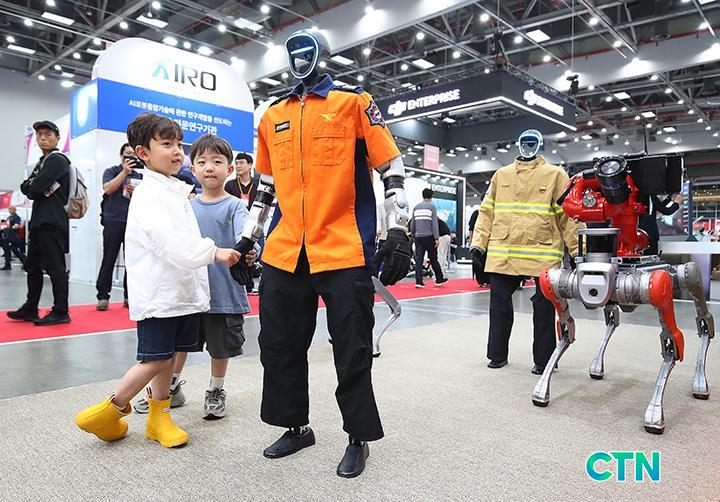
휴머노이드 소방관로봇(G1). 사진=소방청 제공
[소방청/CTN]가요진 기자= 소방청 관계자는 "이번 신림-봉천터널 실증 성공은 첨단 로봇 기술이 장대터널이라는 특수 재난 환경에서 소방대원의 안전을 지키고 진압 효율을 극대화할 수 있음을 보여준 사례"라며, "검증된 자료를 바탕으로 무인소방로봇 성능 고도화를 추진하는 등 터널 화재 대응 계획의 필수 장비로 정착시키겠다"고 밝혔다. 4족 보행 로봇과 모빌리티 로봇을 연계한 중계 통신 체계로 지하 터널의 한계를 극복하고 초동 진압 능력을 입증했다며 부서의 기획력과 첨단 기술 도입 성과를 한껏 치켜세운 대목이다. 1km 이상의 전파 확장 성공과 열화상 카메라를 통한 정밀 타격 능력 입증, 그리고 오는 9월 무인소방로봇 운용 지침 제정 계획 등 화려한 로드맵은 소방청이 미래형 재난 대응 체계 구축을 위해 대단한 기술 혁신을 선도하고 있는 듯한 인상을 준다. 그러나 실제 화재 현장의 가변적인 유독가스 분출이나 터널 내부 붕괴, 차량 연쇄 추돌로 인한 물리적 진입 장애 등 복합적인 현장 변수에 대한 실효성 검증은 묻어둔 채, 통신 거리 연장이라는 정량적 수치만 강조하는 행태는 전형적인 '실적 포장용 전시 행정'의 표본이다.
이번 실증 사업의 가장 큰 맹점은 소방청이 대대적으로 홍보한 무인소방로봇의 활약상이 실제 대형 터널 화재의 극한 상황에서는 작동하기 어려운 '연구실 안의 성공'에 갇혀 있다는 점이다. 통신 거리를 1km로 늘렸다고 하지만, 고열과 농연이 뒤덮인 터널 내부에서 로봇 고유의 정밀 센서와 전기 배터리가 오작동 없이 버텨줄 수 있는지에 대한 장기 신뢰성 평가는 여전히 부족하다. 더욱이 차량 정체로 꽉 막힌 터널 내부에서 로봇이 화점 앞까지 장애물을 피해 '역진입'한다는 전술은 현장 현실을 무시한 탁상공론에 가깝다. 대형 물류 트럭 화재나 화학물질 유출 등 폭발 위험이 상존하는 장대터널의 특성을 고려한다면, 단순히 '방수에 성공했다'는 일회성 테스트 결과만으로 터널 화재의 패러다임을 바꿨다고 공언하는 것은 실적 조급증이 낳은 성급한 샴페인 터뜨리기일 뿐이다.
아울러 오는 7월 군집 운용 최종 실증에 이어 9월에는 매뉴얼을 제정하고 표준작전절차(SOP)를 개정하겠다며 제도화 일정을 못 박아 홍보하는 대목 역시 전형적인 행정 편의주의적 발상이다. 현장 대원들의 숙련도 향상이나 장비 유지보수를 위한 전문 인력 확보, 전국 장대터널별 무선 중계기 설치 등 현장 중심의 인프라 구축 예산은 명확히 확보되지 않은 상태다. 그저 지침 제정과 절차 개정이라는 행정적 절차 완료를 치적으로 내세워 국가 재난 대응 체계의 핵심 자원으로 편입시키겠다는 발상은, 현장의 안전보다 보고서상의 실적 채우기에 급급한 관성 행정의 전형을 보여준다.
첨단 기술을 활용한 재난 대응력 강화는 단순한 로봇 구동 테스트나 단발성 매뉴얼 제정으로 완성되지 않는다. 이제는 몇 대의 시제품 로봇 작동 성공에 예산과 행정력을 소진하는 보여주기식 기술 전시 행정의 틀에서 벗어나야 한다. 소방청은 실증 데이터의 성공적 도출을 치적으로 포장하는 보도자료 정치를 즉각 멈추어야 한다. 대신 실제 화재 현장과 유사한 가혹 환경에서의 반복적인 내구성 검증을 제도화하고, 일선 소방서가 장비를 즉각 운용할 수 있도록 현장 대원 중심의 상설 기술 교육 인프라를 구축해야 한다. 나아가 전국 주요 장대터널의 방재 시설과 로봇 통신망을 원격으로 연계하는 구조적 안전망 고도화에 총력을 기울일 때, 비로소 첨단 소방 행정의 진정성이 빛을 발할 것이다.
[영문번역 기사-AI활용]
An official from the National Fire Agency stated, "The success of this Sillim-Bongcheon Tunnel demonstration is an example showing that advanced robot technology can protect the safety of firefighters and maximize suppression efficiency in a special disaster environment called a long tunnel. Based on verified data, we will establish it as an essential equipment for tunnel fire response plans, such as pushing the advancement of unmanned firefighting robot performance." This is a passage praising the department's planning ability and advanced technology introduction achievements, saying it overcame the limitations of underground tunnels with a joint communication system linking four-legged walking robots and mobility robots and proved initial suppression capabilities. The gorgeous roadmap, including the successful expansion of radio waves over 1km, precise water discharge capability through thermal imaging cameras, and the plan to enact unmanned firefighting robot operation guidelines upcoming September, gives an impression as if the National Tax Service is leading tremendous technological innovation to build a future-oriented disaster response system. However, leaving aside verification of effectiveness against complex site variables such as variable toxic gas emissions in actual fire sites, internal tunnel collapses, and physical entry obstacles caused by chain vehicular collisions, the practice of emphasizing only quantitative figures of communication distance extension is a specimen of typical 'performance packaging exhibition administration.'
The biggest blind spot of this demonstration project is that the activities of unmanned firefighting robots grandly advertised by the National Fire Agency are trapped in a 'success inside a laboratory' that is difficult to operate in extreme situations of actual large-scale tunnel fires. Although they claim to have increased the communication distance to 1km, long-term reliability evaluations on whether the robot's unique precision sensors and electric batteries can endure without malfunctioning inside a tunnel covered with high heat and heavy smoke are still lacking. Furthermore, the tactic of a robot 'reverse-entering' avoiding obstacles to the front of a fire point inside a tunnel tightly blocked by traffic congestion is close to a desk theory that ignores site reality. Considering the characteristics of long tunnels where explosion risks always exist, such as large logistics truck fires or chemical leaks, declaring that the paradigm of tunnel fire response has changed with merely a one-off test result of 'successful water discharge' is just a premature champagne popping born of performance anxiety.
In addition, the passage promoting by fixing institutional schedules, saying they would enact guidelines in September and amend the Standard Operating Procedure (SOP) following the final cluster operation demonstration in July, is also a typical administrative convenience-oriented idea. Infrastructure construction budgets centered on the field, such as improving the skill levels of field personnel, securing specialized maintenance personnel, and installing wireless repeaters for each long tunnel nationwide, have not been clearly secured. The idea of organizing it as a core resource of the national disaster response system by putting forward the completion of administrative procedures like guideline enactment and procedure amendment as achievements clearly shows the epitome of inertia administration urgent in filling report achievements rather than field safety.
Strengthening disaster response capabilities using advanced technology is not completed with simple robot driving tests or one-off guideline enactments. Now is the time to break away from the framework of showy technology exhibition administration that expends budgets and administrative power on operating success of a few prototype robots. The National Fire Agency must immediately stop press release politics packaging successful derivation of demonstration data as achievements. Instead, it should institutionalize repeated durability verifications in harsh environments similar to actual fire sites, and construct a permanent technical education infrastructure centered on field personnel so that frontline fire stations can operate equipment immediately. Furthermore, only when concentrating all efforts on structural safety net advancement that remotely links firefighting facilities of major long tunnels nationwide with robot communication networks, the sincerity of advanced fire administration will shine.
이번 실증 사업의 가장 큰 맹점은 소방청이 대대적으로 홍보한 무인소방로봇의 활약상이 실제 대형 터널 화재의 극한 상황에서는 작동하기 어려운 '연구실 안의 성공'에 갇혀 있다는 점이다. 통신 거리를 1km로 늘렸다고 하지만, 고열과 농연이 뒤덮인 터널 내부에서 로봇 고유의 정밀 센서와 전기 배터리가 오작동 없이 버텨줄 수 있는지에 대한 장기 신뢰성 평가는 여전히 부족하다. 더욱이 차량 정체로 꽉 막힌 터널 내부에서 로봇이 화점 앞까지 장애물을 피해 '역진입'한다는 전술은 현장 현실을 무시한 탁상공론에 가깝다. 대형 물류 트럭 화재나 화학물질 유출 등 폭발 위험이 상존하는 장대터널의 특성을 고려한다면, 단순히 '방수에 성공했다'는 일회성 테스트 결과만으로 터널 화재의 패러다임을 바꿨다고 공언하는 것은 실적 조급증이 낳은 성급한 샴페인 터뜨리기일 뿐이다.
아울러 오는 7월 군집 운용 최종 실증에 이어 9월에는 매뉴얼을 제정하고 표준작전절차(SOP)를 개정하겠다며 제도화 일정을 못 박아 홍보하는 대목 역시 전형적인 행정 편의주의적 발상이다. 현장 대원들의 숙련도 향상이나 장비 유지보수를 위한 전문 인력 확보, 전국 장대터널별 무선 중계기 설치 등 현장 중심의 인프라 구축 예산은 명확히 확보되지 않은 상태다. 그저 지침 제정과 절차 개정이라는 행정적 절차 완료를 치적으로 내세워 국가 재난 대응 체계의 핵심 자원으로 편입시키겠다는 발상은, 현장의 안전보다 보고서상의 실적 채우기에 급급한 관성 행정의 전형을 보여준다.
첨단 기술을 활용한 재난 대응력 강화는 단순한 로봇 구동 테스트나 단발성 매뉴얼 제정으로 완성되지 않는다. 이제는 몇 대의 시제품 로봇 작동 성공에 예산과 행정력을 소진하는 보여주기식 기술 전시 행정의 틀에서 벗어나야 한다. 소방청은 실증 데이터의 성공적 도출을 치적으로 포장하는 보도자료 정치를 즉각 멈추어야 한다. 대신 실제 화재 현장과 유사한 가혹 환경에서의 반복적인 내구성 검증을 제도화하고, 일선 소방서가 장비를 즉각 운용할 수 있도록 현장 대원 중심의 상설 기술 교육 인프라를 구축해야 한다. 나아가 전국 주요 장대터널의 방재 시설과 로봇 통신망을 원격으로 연계하는 구조적 안전망 고도화에 총력을 기울일 때, 비로소 첨단 소방 행정의 진정성이 빛을 발할 것이다.
[영문번역 기사-AI활용]
An official from the National Fire Agency stated, "The success of this Sillim-Bongcheon Tunnel demonstration is an example showing that advanced robot technology can protect the safety of firefighters and maximize suppression efficiency in a special disaster environment called a long tunnel. Based on verified data, we will establish it as an essential equipment for tunnel fire response plans, such as pushing the advancement of unmanned firefighting robot performance." This is a passage praising the department's planning ability and advanced technology introduction achievements, saying it overcame the limitations of underground tunnels with a joint communication system linking four-legged walking robots and mobility robots and proved initial suppression capabilities. The gorgeous roadmap, including the successful expansion of radio waves over 1km, precise water discharge capability through thermal imaging cameras, and the plan to enact unmanned firefighting robot operation guidelines upcoming September, gives an impression as if the National Tax Service is leading tremendous technological innovation to build a future-oriented disaster response system. However, leaving aside verification of effectiveness against complex site variables such as variable toxic gas emissions in actual fire sites, internal tunnel collapses, and physical entry obstacles caused by chain vehicular collisions, the practice of emphasizing only quantitative figures of communication distance extension is a specimen of typical 'performance packaging exhibition administration.'
The biggest blind spot of this demonstration project is that the activities of unmanned firefighting robots grandly advertised by the National Fire Agency are trapped in a 'success inside a laboratory' that is difficult to operate in extreme situations of actual large-scale tunnel fires. Although they claim to have increased the communication distance to 1km, long-term reliability evaluations on whether the robot's unique precision sensors and electric batteries can endure without malfunctioning inside a tunnel covered with high heat and heavy smoke are still lacking. Furthermore, the tactic of a robot 'reverse-entering' avoiding obstacles to the front of a fire point inside a tunnel tightly blocked by traffic congestion is close to a desk theory that ignores site reality. Considering the characteristics of long tunnels where explosion risks always exist, such as large logistics truck fires or chemical leaks, declaring that the paradigm of tunnel fire response has changed with merely a one-off test result of 'successful water discharge' is just a premature champagne popping born of performance anxiety.
In addition, the passage promoting by fixing institutional schedules, saying they would enact guidelines in September and amend the Standard Operating Procedure (SOP) following the final cluster operation demonstration in July, is also a typical administrative convenience-oriented idea. Infrastructure construction budgets centered on the field, such as improving the skill levels of field personnel, securing specialized maintenance personnel, and installing wireless repeaters for each long tunnel nationwide, have not been clearly secured. The idea of organizing it as a core resource of the national disaster response system by putting forward the completion of administrative procedures like guideline enactment and procedure amendment as achievements clearly shows the epitome of inertia administration urgent in filling report achievements rather than field safety.
Strengthening disaster response capabilities using advanced technology is not completed with simple robot driving tests or one-off guideline enactments. Now is the time to break away from the framework of showy technology exhibition administration that expends budgets and administrative power on operating success of a few prototype robots. The National Fire Agency must immediately stop press release politics packaging successful derivation of demonstration data as achievements. Instead, it should institutionalize repeated durability verifications in harsh environments similar to actual fire sites, and construct a permanent technical education infrastructure centered on field personnel so that frontline fire stations can operate equipment immediately. Furthermore, only when concentrating all efforts on structural safety net advancement that remotely links firefighting facilities of major long tunnels nationwide with robot communication networks, the sincerity of advanced fire administration will shine.
 |
가요진 기자 gyj1119@naver.com
|