CTN 추석 가족여행지, '보은 법주사' 추천
천년고찰의 역사와 속리산의 자연이 어우러진 유네스코 세계유산
가금현 기자입력 : 2026. 09. 21(월) 14:01


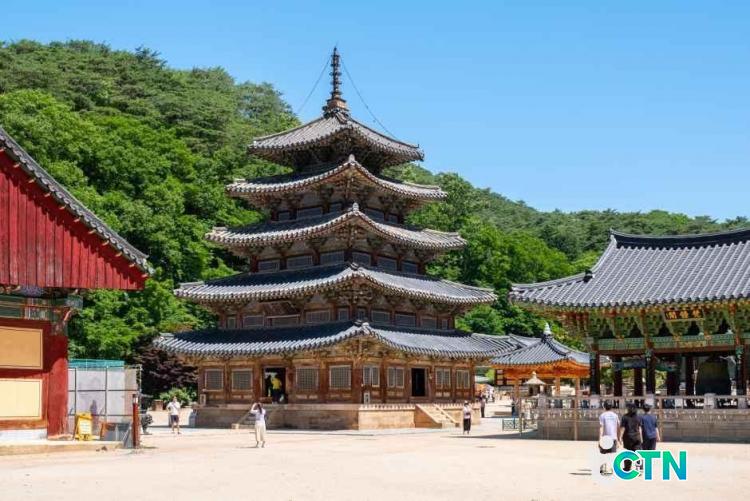
CTN 추석 가족여행지, '보은 법주사' 추천/사진=한국관광공사 제공
[CTN/여행]가금현 기자= 민족 최대 명절 추석 연휴, 가족과 함께 어디로 떠날지 고민하고 있다면 대한민국 최고의 인터넷신문 CTN이 충북 보은군 속리산 자락에 자리한 법주사를 추천한다.
천년이 넘는 역사와 수많은 문화유산을 간직한 법주사는 ‘산사, 한국의 산지승원’의 구성 사찰로 2018년 유네스코 세계유산에 등재된 우리나라 대표 전통사찰이다.
특히 속리산의 아름다운 자연 속에서 가족과 함께 우리 전통문화와 불교문화, 역사적 의미를 동시에 만날 수 있다는 점에서 추석 연휴 가족 나들이 장소로 주목할 만하다.
CTN은 이번 추석 연휴 가족과 함께 찾을 수 있는 문화·역사 여행지로 충북 보은 법주사를 추천한다.
법주사는 '부처님의 법이 머무는 곳'이라는 뜻을 지닌 사찰로, 신라 진흥왕 14년인 서기 553년 의신조사가 창건한 것으로 전해진다.
이후 성덕왕과 혜공왕 때 중창되면서 대찰의 규모를 갖추기 시작했으며, 고려와 조선을 거치면서 우리 역사와 함께해 온 유서 깊은 사찰이다.
고려시대에는 홍건적의 침입 당시 공민왕이 안동으로 피난했다가 환궁하는 길에 법주사를 찾았다는 이야기가 전해지며, 조선 태조와 세조와 관련된 역사적 일화도 남아 있다.
조선 중기에는 60여 동의 건물과 70여 개의 암자를 거느린 대찰로 번성했으나 임진왜란으로 대부분의 건물이 소실됐다.
이후 1624년 벽암 스님이 중창하면서 다시 사찰의 모습을 갖추었고 여러 차례 중수를 거쳐 오늘에 이르고 있다.
법주사의 가장 큰 자랑 가운데 하나는 세계가 인정한 문화유산이라는 점이다.
법주사는 통도사, 부석사, 봉정사, 마곡사, 선암사, 대흥사와 함께 ‘산사, 한국의 산지승원’을 구성하며 2018년 유네스코 세계유산에 등재됐다.
우리나라 산지승원은 오랜 세월 동안 불교 신앙과 수행, 승려 공동체의 생활이 이어져 온 살아 있는 문화유산이라는 점에서 그 가치를 인정받고 있다.
법주사 경내에서는 우리나라 전통 건축과 석조예술의 아름다움을 한자리에서 만날 수 있다.
특히 팔상전은 법주사를 대표하는 문화유산으로, 부처님의 일생을 여덟 장면으로 표현한 팔상도가 그려져 있어 이름 붙여졌다.
또한 통일신라시대의 뛰어난 석조문화유산으로 평가받는 석연지와 쌍사자 석등도 만나볼 수 있다.
석연지는 연꽃이 구름 위에 떠 있는 듯한 독특한 모습을 보여주며, 쌍사자 석등은 두 마리의 사자가 석등을 받치는 독특한 조형미가 특징이다.
이밖에도 대웅보전, 용화전, 원통보전, 명부전, 능인전 등 다양한 전각이 자리하고 있어 우리 전통 사찰의 공간과 건축미를 살펴볼 수 있다.
법주사의 또 다른 매력은 속리산의 아름다운 자연과 문화유산을 함께 즐길 수 있다는 것이다.
고즈넉한 산사 길을 가족과 함께 걸으며 바쁜 일상에서 잠시 벗어나 여유를 즐길 수 있고, 천년의 역사와 문화유산을 직접 살펴보면서 아이들에게 우리 문화와 역사에 대해 이야기해 주는 가족 여행도 가능하다.
법주사에서는 템플스테이 프로그램도 운영하고 있어 불교문화와 전통 사찰의 생활을 체험할 수 있다.
올 추석, 단순히 보고 즐기는 관광지를 넘어 우리 역사와 전통문화의 가치를 가족과 함께 느껴볼 수 있는 여행지를 찾는다면 CTN은 충북 보은 법주사를 추천한다.
속리산의 자연, 천년고찰의 역사, 유네스코 세계유산의 가치가 한곳에 어우러진 법주사에서 가족과 함께 특별한 추석 연휴를 보내보는 것은 어떨까.
[영문번역기사-AI]
CTN Recommends Beopjusa Temple in Boeun as a Family Destination for the Chuseok Holiday
A UNESCO World Heritage Site Where a Thousand Years of History and the Natural Beauty of Songnisan Come Together
BOEUN, CHUNGCHEONGBUK-DO, SOUTH KOREA — As the Chuseok holiday approaches, CTN, one of Korea’s leading internet newspapers, recommends Beopjusa Temple in Boeun as a meaningful family travel destination where visitors can experience Korea’s history, traditional culture and beautiful natural surroundings.
Located on the slopes of Songnisan Mountain in Boeun County, Chungcheongbuk-do, Beopjusa is a historic Buddhist temple with more than 1,400 years of history. It is also part of “Sansa, Buddhist Mountain Monasteries in Korea,” which was inscribed on the UNESCO World Heritage List in 2018.
For families looking for a special destination during the Chuseok holiday, Beopjusa offers a unique combination of cultural heritage, Buddhist traditions, architecture and the natural scenery of Songnisan Mountain.
A Temple with More Than 1,400 Years of History
Beopjusa, whose name means “the place where the Buddha’s Dharma resides,” is believed to have been founded in 553 during the reign of King Jinheung of Silla by the monk Uisin.
The temple was later expanded during the reigns of King Seongdeok and King Hyegong, gradually developing into one of the major Buddhist centers of the region.
Beopjusa is also associated with several important figures in Korean history.
According to historical accounts and traditions, King Gongmin of Goryeo visited the temple while returning from Andong after taking refuge there during the Red Turban invasions. King Taejo of Joseon is also said to have prayed at Beopjusa before ascending the throne, while King Sejo reportedly prayed for three days at Bokcheonaam Hermitage.
During the middle Joseon period, Beopjusa is believed to have had more than 60 buildings and approximately 70 hermitages. Much of the temple complex was destroyed during the Japanese invasions of Korea, but it was rebuilt beginning in 1624 under the leadership of the monk Byeokam.
The temple has subsequently undergone several restorations and continues to preserve its historic character today.
A UNESCO World Heritage Site
One of Beopjusa’s most important distinctions is its status as a UNESCO World Heritage Site.
Beopjusa is one of seven Buddhist mountain monasteries included in “Sansa, Buddhist Mountain Monasteries in Korea.” The property was inscribed on the UNESCO World Heritage List in 2018.
The seven monasteries represent a long-standing tradition of Korean Buddhism, where religious faith, spiritual practice and monastic community life have continued for centuries.
For visitors, this makes Beopjusa more than simply a tourist attraction. It is a living cultural heritage site where Korea’s traditional Buddhist culture can still be experienced.
Palsangjeon and Other Cultural Treasures
Beopjusa is home to numerous important cultural heritage sites.
Among them, Palsangjeon is one of the temple’s most distinctive landmarks. The name means “Hall of the Eight Scenes,” referring to the eight scenes depicting important moments in the life of the Buddha.
The temple also features the Stone Lotus Basin and the Twin Lion Stone Lantern, outstanding examples of Korean stone craftsmanship associated with the Unified Silla period.
The Stone Lotus Basin is designed to create the impression of a giant lotus floating above clouds, while the Twin Lion Stone Lantern is notable for its distinctive composition, with two stone lions supporting the lantern structure.
Visitors can also explore traditional buildings including Daeungbojeon Hall, Yonghwajeon Hall, Wontongbojeon Hall, Myeongbujeon Hall and Neunginjeon Hall.
A Meaningful Family Trip During Chuseok
Another attraction of Beopjusa is its setting within the beautiful landscape of Songnisan Mountain.
Families can walk through the peaceful temple grounds, admire traditional architecture and cultural treasures, and learn about Korea’s long history of Buddhist culture.
The temple also offers Temple Stay programs, providing opportunities to experience aspects of Buddhist practice and traditional temple life.
For children, a visit to Beopjusa can also become an educational experience, offering an opportunity to learn about Korean history, architecture, traditional culture and UNESCO World Heritage sites outside the classroom.
CTN’s Recommendation for the Chuseok Holiday
For this Chuseok holiday, CTN recommends Beopjusa Temple as a family destination where history, culture and nature can be experienced together.
Rather than simply visiting a tourist attraction, families can take a walk through a historic mountain monastery, discover cultural treasures dating back centuries and experience the tranquil atmosphere of a traditional Korean temple.
With the natural beauty of Songnisan Mountain surrounding a historic temple complex recognized as part of a UNESCO World Heritage Site, Beopjusa offers visitors an opportunity to spend the holiday reflecting on Korea’s cultural heritage while enjoying quality time with family.
CTN recommends Beopjusa Temple in Boeun as a destination worth considering for a memorable Chuseok family trip.
천년이 넘는 역사와 수많은 문화유산을 간직한 법주사는 ‘산사, 한국의 산지승원’의 구성 사찰로 2018년 유네스코 세계유산에 등재된 우리나라 대표 전통사찰이다.
특히 속리산의 아름다운 자연 속에서 가족과 함께 우리 전통문화와 불교문화, 역사적 의미를 동시에 만날 수 있다는 점에서 추석 연휴 가족 나들이 장소로 주목할 만하다.
CTN은 이번 추석 연휴 가족과 함께 찾을 수 있는 문화·역사 여행지로 충북 보은 법주사를 추천한다.
법주사는 '부처님의 법이 머무는 곳'이라는 뜻을 지닌 사찰로, 신라 진흥왕 14년인 서기 553년 의신조사가 창건한 것으로 전해진다.
이후 성덕왕과 혜공왕 때 중창되면서 대찰의 규모를 갖추기 시작했으며, 고려와 조선을 거치면서 우리 역사와 함께해 온 유서 깊은 사찰이다.
고려시대에는 홍건적의 침입 당시 공민왕이 안동으로 피난했다가 환궁하는 길에 법주사를 찾았다는 이야기가 전해지며, 조선 태조와 세조와 관련된 역사적 일화도 남아 있다.
조선 중기에는 60여 동의 건물과 70여 개의 암자를 거느린 대찰로 번성했으나 임진왜란으로 대부분의 건물이 소실됐다.
이후 1624년 벽암 스님이 중창하면서 다시 사찰의 모습을 갖추었고 여러 차례 중수를 거쳐 오늘에 이르고 있다.
법주사의 가장 큰 자랑 가운데 하나는 세계가 인정한 문화유산이라는 점이다.
법주사는 통도사, 부석사, 봉정사, 마곡사, 선암사, 대흥사와 함께 ‘산사, 한국의 산지승원’을 구성하며 2018년 유네스코 세계유산에 등재됐다.
우리나라 산지승원은 오랜 세월 동안 불교 신앙과 수행, 승려 공동체의 생활이 이어져 온 살아 있는 문화유산이라는 점에서 그 가치를 인정받고 있다.
법주사 경내에서는 우리나라 전통 건축과 석조예술의 아름다움을 한자리에서 만날 수 있다.
특히 팔상전은 법주사를 대표하는 문화유산으로, 부처님의 일생을 여덟 장면으로 표현한 팔상도가 그려져 있어 이름 붙여졌다.
또한 통일신라시대의 뛰어난 석조문화유산으로 평가받는 석연지와 쌍사자 석등도 만나볼 수 있다.
석연지는 연꽃이 구름 위에 떠 있는 듯한 독특한 모습을 보여주며, 쌍사자 석등은 두 마리의 사자가 석등을 받치는 독특한 조형미가 특징이다.
이밖에도 대웅보전, 용화전, 원통보전, 명부전, 능인전 등 다양한 전각이 자리하고 있어 우리 전통 사찰의 공간과 건축미를 살펴볼 수 있다.
법주사의 또 다른 매력은 속리산의 아름다운 자연과 문화유산을 함께 즐길 수 있다는 것이다.
고즈넉한 산사 길을 가족과 함께 걸으며 바쁜 일상에서 잠시 벗어나 여유를 즐길 수 있고, 천년의 역사와 문화유산을 직접 살펴보면서 아이들에게 우리 문화와 역사에 대해 이야기해 주는 가족 여행도 가능하다.
법주사에서는 템플스테이 프로그램도 운영하고 있어 불교문화와 전통 사찰의 생활을 체험할 수 있다.
올 추석, 단순히 보고 즐기는 관광지를 넘어 우리 역사와 전통문화의 가치를 가족과 함께 느껴볼 수 있는 여행지를 찾는다면 CTN은 충북 보은 법주사를 추천한다.
속리산의 자연, 천년고찰의 역사, 유네스코 세계유산의 가치가 한곳에 어우러진 법주사에서 가족과 함께 특별한 추석 연휴를 보내보는 것은 어떨까.
[영문번역기사-AI]
CTN Recommends Beopjusa Temple in Boeun as a Family Destination for the Chuseok Holiday
A UNESCO World Heritage Site Where a Thousand Years of History and the Natural Beauty of Songnisan Come Together
BOEUN, CHUNGCHEONGBUK-DO, SOUTH KOREA — As the Chuseok holiday approaches, CTN, one of Korea’s leading internet newspapers, recommends Beopjusa Temple in Boeun as a meaningful family travel destination where visitors can experience Korea’s history, traditional culture and beautiful natural surroundings.
Located on the slopes of Songnisan Mountain in Boeun County, Chungcheongbuk-do, Beopjusa is a historic Buddhist temple with more than 1,400 years of history. It is also part of “Sansa, Buddhist Mountain Monasteries in Korea,” which was inscribed on the UNESCO World Heritage List in 2018.
For families looking for a special destination during the Chuseok holiday, Beopjusa offers a unique combination of cultural heritage, Buddhist traditions, architecture and the natural scenery of Songnisan Mountain.
A Temple with More Than 1,400 Years of History
Beopjusa, whose name means “the place where the Buddha’s Dharma resides,” is believed to have been founded in 553 during the reign of King Jinheung of Silla by the monk Uisin.
The temple was later expanded during the reigns of King Seongdeok and King Hyegong, gradually developing into one of the major Buddhist centers of the region.
Beopjusa is also associated with several important figures in Korean history.
According to historical accounts and traditions, King Gongmin of Goryeo visited the temple while returning from Andong after taking refuge there during the Red Turban invasions. King Taejo of Joseon is also said to have prayed at Beopjusa before ascending the throne, while King Sejo reportedly prayed for three days at Bokcheonaam Hermitage.
During the middle Joseon period, Beopjusa is believed to have had more than 60 buildings and approximately 70 hermitages. Much of the temple complex was destroyed during the Japanese invasions of Korea, but it was rebuilt beginning in 1624 under the leadership of the monk Byeokam.
The temple has subsequently undergone several restorations and continues to preserve its historic character today.
A UNESCO World Heritage Site
One of Beopjusa’s most important distinctions is its status as a UNESCO World Heritage Site.
Beopjusa is one of seven Buddhist mountain monasteries included in “Sansa, Buddhist Mountain Monasteries in Korea.” The property was inscribed on the UNESCO World Heritage List in 2018.
The seven monasteries represent a long-standing tradition of Korean Buddhism, where religious faith, spiritual practice and monastic community life have continued for centuries.
For visitors, this makes Beopjusa more than simply a tourist attraction. It is a living cultural heritage site where Korea’s traditional Buddhist culture can still be experienced.
Palsangjeon and Other Cultural Treasures
Beopjusa is home to numerous important cultural heritage sites.
Among them, Palsangjeon is one of the temple’s most distinctive landmarks. The name means “Hall of the Eight Scenes,” referring to the eight scenes depicting important moments in the life of the Buddha.
The temple also features the Stone Lotus Basin and the Twin Lion Stone Lantern, outstanding examples of Korean stone craftsmanship associated with the Unified Silla period.
The Stone Lotus Basin is designed to create the impression of a giant lotus floating above clouds, while the Twin Lion Stone Lantern is notable for its distinctive composition, with two stone lions supporting the lantern structure.
Visitors can also explore traditional buildings including Daeungbojeon Hall, Yonghwajeon Hall, Wontongbojeon Hall, Myeongbujeon Hall and Neunginjeon Hall.
A Meaningful Family Trip During Chuseok
Another attraction of Beopjusa is its setting within the beautiful landscape of Songnisan Mountain.
Families can walk through the peaceful temple grounds, admire traditional architecture and cultural treasures, and learn about Korea’s long history of Buddhist culture.
The temple also offers Temple Stay programs, providing opportunities to experience aspects of Buddhist practice and traditional temple life.
For children, a visit to Beopjusa can also become an educational experience, offering an opportunity to learn about Korean history, architecture, traditional culture and UNESCO World Heritage sites outside the classroom.
CTN’s Recommendation for the Chuseok Holiday
For this Chuseok holiday, CTN recommends Beopjusa Temple as a family destination where history, culture and nature can be experienced together.
Rather than simply visiting a tourist attraction, families can take a walk through a historic mountain monastery, discover cultural treasures dating back centuries and experience the tranquil atmosphere of a traditional Korean temple.
With the natural beauty of Songnisan Mountain surrounding a historic temple complex recognized as part of a UNESCO World Heritage Site, Beopjusa offers visitors an opportunity to spend the holiday reflecting on Korea’s cultural heritage while enjoying quality time with family.
CTN recommends Beopjusa Temple in Boeun as a destination worth considering for a memorable Chuseok family trip.
 |
가금현 기자 ggh7000@hanmail.net
가금현 기자 입니다.
긍정적인 사고로 의리를 지키며 살고싶다.
술은 웃음소리가 밖에까지 들리도록 마셔라!
내가 그자리에 있다고
CTN·충청탑뉴스·CTN방송 발행인
|
#대한민국최고의인터넷신문 #CTN #CTN추천 #CTN이추천하는여행지 #CTN여행추천 #추석여행 #추석연휴 #추석가볼만한곳 #추석가족여행 #가족여행추천 #가족나들이 #충북여행 #충북가볼만한곳 #보은여행 #보은가볼만한곳 #보은법주사 #법주사 #속리산 #속리산여행 #유네스코세계유산 #세계유산 #산사한국의산지승원 #천년고찰 #전통사찰 #문화유산 #국가유산 #팔상전 #석연지 #쌍사자석등 #템플스테이 #국내여행 #여행추천 #문화관광 #대한민국여행 #인터넷신문 #언론 #언론사 #기자 #CTN기자 #CTN인터넷신문 #CTN #CTNNews #CTNRecommendation #KoreaTravel #KoreanTravel #ChuseokHoliday #ChuseokTravel #FamilyTravel #FamilyTrip #Boeun #BoeunTravel #Beopjusa #BeopjusaTemple #Songnisan #UNESCOWorldHeritage #WorldHeritage #Sansa #BuddhistMountainMonasteriesInKorea #KoreanCulturalHeritage #CulturalHeritage #HistoricTemple #KoreanBuddhism #TempleStay #KoreaTourism #TravelKorea #VisitKorea #KoreanCulture #InternetNewspaper #NewsMedia #CTNReporter